Best Money Market Accounts of April 2026: Earn Up to 4.01% APY
Top money market accounts now pay up to 4.01% APY — 7x the national average. Compare rates, minimums, and fees to find the best fit for April 2026.

Key Takeaways
The best money market accounts in April 2026 pay up to 4.01% APY — more than seven times the national average of 0.56%.
TotalBank leads with 4.01% APY, but requires a $25,000 opening deposit; Sallie Mae offers 3.55% APY with no minimum balance at all.
Money market accounts are FDIC-insured up to $250,000 per depositor per institution — unlike money market funds, which carry no federal deposit guarantee.
The Federal Reserve's March 2026 dot plot projects one rate cut in 2026, meaning today's rates are likely near their peak — locking in now makes strategic sense.
UK readers can earn up to 4.62% APY tax-free in a cash ISA; Australians can access up to 5.60% introductory rates through UBank and ING.
Most people park their emergency fund or short-term savings in a traditional bank account paying 0.10% to 0.20% APY. Meanwhile, the best money market accounts are quietly offering 4.01% APY — on the same FDIC-insured cash, with the same liquidity. The difference on a $20,000 balance is roughly $760 in interest per year versus $20. That is not a rounding error. That is a missed vacation, a missed car repair fund, or three months of groceries.
Money market accounts have surged in relevance since the Federal Reserve's aggressive rate-hiking cycle pushed yields to multi-decade highs. Even as the Fed cut rates three times in 2025, the best accounts have held well above 3.5% APY into 2026 — and with the March 2026 Fed dot plot projecting only one additional cut this year, competitive rates are likely to persist through most of 2026. The window to lock in today's returns is real, but it will not stay open indefinitely.
In this guide, we ranked the best money market accounts available in April 2026 across the United States, with equivalent options for readers in the UK, Canada, and Australia. We cover rates, minimum balances, fees, withdrawal access, and the critical difference between a money market account and a money market fund that most guides blur together.
What Is a Money Market Account and Why It Matters in 2026
A money market account (MMA) is a type of deposit account offered by FDIC-insured banks and NCUA-insured credit unions that typically pays a higher interest rate than a standard savings account. Unlike a certificate of deposit (CD), a money market account keeps your funds accessible — many accounts include check-writing privileges and a linked debit card, making them one of the few products that combines competitive yield with genuine liquidity.
The term "money market account" is frequently confused with "money market fund." They are different products with different risk profiles. A money market account is a bank deposit — it is FDIC-insured up to $250,000 per depositor per institution. A money market fund is an investment product offered by brokerages such as Vanguard, Fidelity, and Schwab — it is not FDIC-insured, though it is considered very low risk because it holds short-term government securities and commercial paper. Both products track the federal funds rate closely, but only the bank account carries federal deposit insurance.
"Any short-term products — CDs, money market funds, savings accounts — track the fed funds rate pretty closely. If the base case plays out, by the end of 2026 you would see about 3% on most of those products." — iShares Fixed Income Strategy Team, BlackRock, March 2026
That forecast matters for savers. If money market account rates drift toward 3% by late 2026, the accounts paying 4.01% today represent a meaningful advantage — particularly for savers holding $10,000 or more in cash reserves.
Best Money Market Accounts of April 2026
We evaluated accounts from online banks and credit unions across the United States, scoring each on APY, minimum balance requirements, monthly fees, access features (debit card, check writing), and FDIC coverage. All accounts below are FDIC-insured.
Account APY Min. Balance Monthly Fee Check Writing Best For TotalBank Online MMA 4.01% $2,500 to earn rate; $25,000 to open $0 No Maximum yield on larger balances Brilliant Bank Surge MMA 4.00% $1,000 $0 No Top rate with lower opening deposit EverBank Performance MMA 3.80% $0 $0 No No-minimum, no-fee savers First Foundation Bank Online MMA 3.75% $1,000 $0 Limited Accessible rate for moderate balances Prime Alliance Bank Personal MMA 3.75% $1,000 $0 Yes Best with check-writing access Sallie Mae MMA 3.55% $0 $0 No New savers and small balances
Data as of April 2026. Rates subject to change. Always verify current rates directly with the provider before opening an account. Sources: Bankrate, Yahoo Finance, provider websites.
1. TotalBank Online Money Market Deposit Account — Best Overall Rate
TotalBank offers the highest money market account rate currently available in the United States at 4.01% APY — more than seven times the national average. The catch is an unusually high $25,000 minimum opening deposit, and the advertised rate only applies to balances of $2,500 or more. Balances below that threshold earn 0.00% APY, which is a meaningful penalty if your balance dips. The account does not offer a debit card or check-writing privileges; withdrawals are limited to ACH transfers. For savers with a large cash reserve who prioritise yield above everything else and do not need instant point-of-sale access, TotalBank is hard to beat. There are no monthly maintenance fees.
2. Brilliant Bank Surge Money Market Account — Best Rate With Lower Opening Deposit
Brilliant Bank's Surge MMA offers 4.00% APY with a $1,000 minimum balance — a substantially lower barrier to entry than TotalBank. The rate is competitive at effectively the same level as TotalBank, and the account carries no monthly fees. Brilliant Bank is an online bank with FDIC insurance, making it a strong pick for savers who have $1,000 to $25,000 to deploy and want the highest possible yield without the restrictive opening deposit requirement.
3. EverBank Performance Money Market Account — Best No-Minimum Option
EverBank's Performance MMA earns 3.80% APY with no monthly fees and no stated minimum balance to earn the full rate — making it accessible to savers who are still building their cash reserves. EverBank is FDIC-insured and has a strong track record in the online banking space. At 3.80%, the yield is competitive and meaningfully above the 3.30% threshold that Bankrate considers the lower bound of a competitive money market rate in April 2026.
4. Prime Alliance Bank Personal Money Market Account — Best With Check Writing
Prime Alliance Bank offers 3.75% APY with a $1,000 minimum balance and genuine check-writing access — a feature that most of the top-rate accounts on this list omit entirely. For savers who need occasional direct access to funds without initiating an ACH transfer, Prime Alliance strikes the right balance between yield and liquidity. No monthly maintenance fees apply.
5. Sallie Mae Money Market Account — Best for Small Balances
Sallie Mae's MMA earns 3.55% APY with no minimum balance requirement and no monthly fees — making it the most accessible option on this list. For someone starting an emergency fund from zero or maintaining a small cash reserve between paydays, Sallie Mae lets you earn a competitive yield from dollar one. Sallie Mae is best known as a student loan servicer, but its banking products are FDIC-insured and consistently rank among the top no-minimum savings options in the United States.

How to Choose the Right Money Market Account
Not every high-rate account is right for every saver. The right choice depends on your balance size, how often you need access to your funds, and whether you want the convenience of check writing or a debit card. Here is a step-by-step framework:
Know your balance tier. — If you can maintain $25,000 or more, TotalBank's 4.01% APY makes it the obvious leader. If you have between $1,000 and $25,000, Brilliant Bank's 4.00% APY delivers essentially the same yield without the high opening requirement. Below $1,000, Sallie Mae or EverBank are your strongest options.
Decide how often you need access. — Federal regulations allow up to six convenient withdrawals per month from a money market account before excess transaction fees apply (TotalBank charges $10 per transaction above that limit). If you need to access funds frequently — weekly grocery top-ups, for example — a money market account is not the right product. A checking account or high-yield savings account with a linked debit card will serve you better.
Confirm FDIC coverage for your full balance. — FDIC insurance covers $250,000 per depositor, per institution, per ownership category. If your total cash savings exceed $250,000, consider spreading across two or more FDIC-insured banks rather than concentrating at one institution.
Read the fine print on tiered rates. — Some money market accounts advertise a top rate that only applies to a specific balance range. TotalBank's 4.01% APY applies to balances of $2,500 to $249,999 and also to balances of $250,000 or more, but 0.00% below $2,500. Always confirm what rate applies to your specific balance before opening.
Act before the next Fed rate cut. — The March 2026 Federal Open Market Committee dot plot projects one rate cut for 2026. Goldman Sachs and J.P. Morgan research both put the most likely timing in the second half of the year. Opening an account now captures today's rates and positions you ahead of any decline.
Pro Tip: Money market accounts compound interest daily and credit it monthly at most online banks. Even a difference of 0.25% APY on a $15,000 balance equals $37.50 per year — small on its own, but meaningful when compared across a 10-year savings horizon of $375 in extra interest simply from choosing the right account.
Money Market Account vs. High-Yield Savings vs. CD: Which Is Right for You?
All three products are FDIC-insured and offer yields far above the traditional savings account rate. The difference comes down to access and commitment.
A high-yield savings account (HYSA) is typically the simplest product — high APY, easy ACH transfers, no check writing, no minimum at most online banks. Our guide to the best high-yield savings accounts of 2026 covers this in detail. An HYSA is the better choice for pure yield without minimum balance requirements.
A money market account adds check-writing and sometimes debit card access on top of a competitive yield. It is the right product when you need your savings to also function as a liquid cash account — for example, a business operating account, a tax reserve, or a down payment fund where you might write a large check directly.
A certificate of deposit (CD) typically offers the highest rate of the three products but locks your money for a fixed term (three months to five years). Early withdrawal penalties apply. Our breakdown of the best CD rates of 2026 covers which terms currently offer the most value. CDs are appropriate when you know you will not need the funds for a defined period.
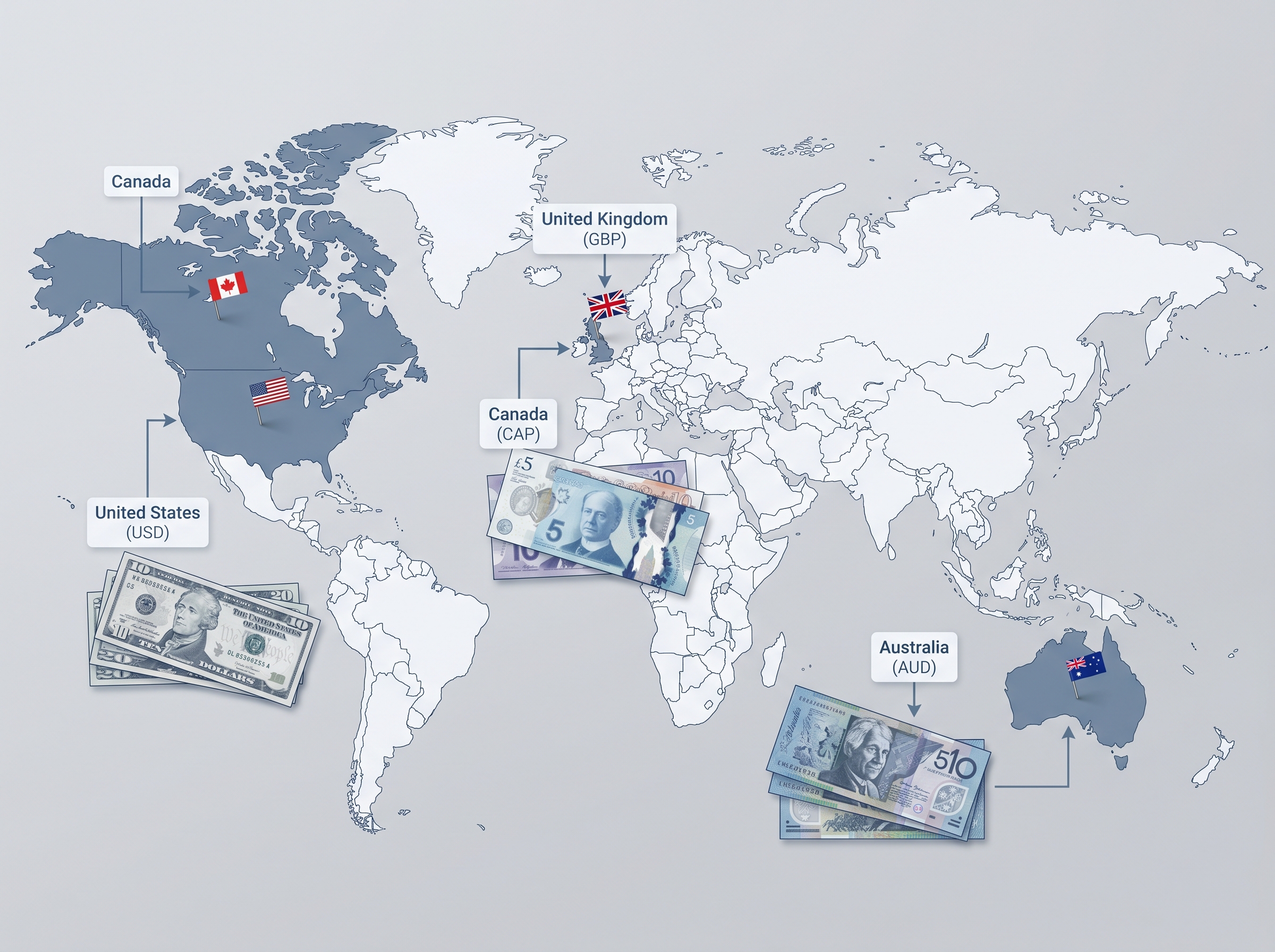
Money Market Accounts for UK, Canadian, and Australian Savers
Money market accounts as a product category are primarily a US banking construct. Readers in other Tier 1 markets have equivalent or sometimes superior options.
United Kingdom: The closest equivalent is a cash ISA — a tax-free savings account that allows up to £20,000 in deposits per tax year (2026/27). The best easy-access cash ISA rates in April 2026 reach 4.62% APY (Trading 212), with fixed-rate ISAs offering up to 4.55% for two- and three-year terms. Critically, interest earned inside an ISA is completely tax-free — a meaningful advantage for higher-rate taxpayers who would otherwise pay 40% income tax on savings interest above the £500 Personal Savings Allowance. Note: from April 2027, HMRC will cap annual cash ISA contributions at £12,000 for savers under 65, so the 2026/27 tax year is the last opportunity to deposit the full £20,000 allowance.
Canada: The Tax-Free Savings Account (TFSA) is the primary vehicle for tax-sheltered savings. The 2026 annual contribution limit is $7,000, and total cumulative contribution room has reached $109,000 for eligible Canadians who have been 18 or older since the TFSA's 2009 introduction. High-interest TFSA savings accounts at online banks such as EQ Bank and Oaken Financial routinely offer 3.00% to 4.00% APY on qualifying balances, matching US money market account rates while sheltering all interest from Canadian income tax.
Australia: Australia does not have a direct money market account equivalent, but high-interest savings accounts (HISAs) at online banks fill the same role. In April 2026, UBank's Save account offers 5.60% p.a. for the first four months on balances up to $1 million — the only requirement is depositing AUD $200 or more per month. ING's Savings Maximiser offers approximately 5.50% p.a. for balances up to $100,000, subject to meeting monthly deposit and purchase conditions. Australian HISAs are protected under the Financial Claims Scheme (FCS) managed by APRA, which guarantees deposits up to AUD $250,000 per account holder per authorised deposit-taking institution.
Frequently Asked Questions
Q: Are money market accounts FDIC insured?
Yes. Money market accounts held at FDIC-member banks are insured up to $250,000 per depositor, per institution, per ownership category. Credit union money market accounts are covered by the equivalent National Credit Union Administration (NCUA) guarantee. This federal insurance is one of the key distinctions between a money market account (bank deposit) and a money market fund (investment product), which carries no FDIC protection.
Q: What is the difference between a money market account and a money market fund?
A money market account is a bank deposit account with FDIC insurance and a fixed APY. A money market fund is a low-risk mutual fund offered by brokerages — products like the Vanguard Federal Money Market Fund (VMFXX) or Fidelity Government Money Market Fund — that invests in short-term government and corporate debt. Money market funds are not FDIC-insured, though they maintain a stable $1 net asset value and are considered extremely low risk. In April 2026, top money market funds yield approximately 4.00% to 4.25% — slightly above the best bank MMA rates, but without deposit insurance.
Q: How many withdrawals can I make from a money market account per month?
Most money market accounts allow up to six convenient withdrawals per statement cycle before excess transaction fees apply. TotalBank, for example, charges $10 per withdrawal above six per month. This limit stems from the historical Regulation D restriction on savings-type accounts, which the Federal Reserve suspended in April 2020 but which many banks have voluntarily retained. If you need unlimited withdrawals, consider a high-yield checking account instead.
Q: Will money market account rates drop in 2026?
Likely yes, but gradually. The Federal Reserve's March 2026 dot plot shows a median projection of one rate cut in 2026, most likely in the second half of the year. Goldman Sachs and J.P. Morgan research both project the federal funds rate declining toward 3.50% to 4.00% by year-end 2026 from its current range. Since money market account yields track the fed funds rate closely, savers should expect competitive rates to soften toward 3.00% to 3.50% APY by late 2026. Opening an account today locks in the current rate environment for as long as the bank maintains its advertised rate.
Q: Can I use a money market account as my primary checking account?
Only partially. While some money market accounts — like Prime Alliance Bank's — offer check-writing privileges, most do not include a debit card with unlimited daily transactions. The six-withdrawal-per-month limit makes an MMA unsuitable as a primary spending account. The best setup for most savers is a high-yield MMA or HYSA for stored cash reserves, paired with a separate checking account for daily spending. This separation also reduces the temptation to spend down your emergency fund.
The Bottom Line
Money market account rates in April 2026 are the best they have been in over 15 years relative to inflation — and with only one Fed rate cut projected for 2026, this window of elevated yields is likely to persist at least through mid-year. The best account for most savers is Brilliant Bank's 4.00% APY with a $1,000 minimum, which delivers essentially the same rate as TotalBank without the restrictive $25,000 opening requirement. Savers who are still building their emergency fund should start with Sallie Mae's no-minimum account at 3.55% APY — earning nothing while you "decide" is a guaranteed loss.
Once your cash reserves are working harder, the next step is making your invested savings do the same. Our guides to the best robo-advisors of 2026 and the best S&P 500 ETFs walk you through putting the money above your emergency fund to work in the market — where long-term returns historically outpace any savings account by a factor of three to five.
Disclaimer: This article is for informational purposes only and does not constitute personalized financial, investment, legal, or tax advice. Rates and account terms are subject to change without notice. Always verify current rates and terms directly with the provider before opening an account. Consult a qualified financial professional before making major financial decisions.
Sources
Yahoo Finance. "Best money market account rates today, April 15, 2026 (secure up to 4.01% APY)." April 2026. Link
MyBankTracker. "TotalBank Money Market Account 2026 Review." April 2026. Link
Bankrate. "Best Money Market Account Rates of April 2026." April 2026. Link
Federal Reserve. "Minutes of the Federal Open Market Committee, March 2026." March 2026. Link
Goldman Sachs. "The Outlook for Fed Rate Cuts in 2026." 2026. Link
iShares by BlackRock. "Fed Outlook 2026: Rate Forecasts and Fixed Income Strategies." 2026. Link
MoneySavingExpert. "Best cash ISAs: up to 4.62% easy access, April 2026." April 2026. Link
NerdWallet Canada. "Best TFSA Interest Rates in Canada for 2026." April 2026. Link
Finder Australia. "Best High-Interest Savings Accounts Australia: Best rates April 2026." April 2026. Link
CNBC Select. "Money market account vs. high-yield savings account: What's the difference?" 2026. Link