Best Dividend Stocks and ETFs of April 2026: Build Passive Income
Dividends drove 40% of S&P 500 total returns over decades. Compare the best dividend stocks and ETFs of April 2026 to build lasting passive income.

Key Takeaways
Dividends have historically contributed approximately 40% of the S&P 500's total return over several decades — yet most retail investors focus entirely on price appreciation and ignore income entirely.
SCHD (Schwab U.S. Dividend Equity ETF) is the top overall dividend ETF for April 2026: 3.40% yield, 0.06% expense ratio, and 481% cumulative total return since its 2011 inception.
The best individual dividend stocks for income range from Realty Income (5.0% yield, monthly payout) to Vici Properties (6.3% yield) — but yield alone is never the right screening criterion.
Dividend Aristocrats are S&P 500 companies with 25+ consecutive years of dividend increases (69 stocks in 2026); Dividend Kings have 50+ years (57 stocks). Both lists serve as a quality filter, not a buy list.
Tax treatment of dividends varies significantly: Australian investors benefit from franking credits on domestic dividends; UK investors can shelter dividend income inside a Stocks and Shares ISA; US investors must distinguish qualified from ordinary dividends.
Most investors obsess over stock prices. Meanwhile, dividends have quietly driven roughly 40% of the S&P 500's total return over several decades — an income stream that compounds invisibly in the background and keeps paying regardless of whether the market goes up or down on any given Tuesday. A $100,000 portfolio yielding 4% generates $4,000 in annual income with zero additional trades required. The same portfolio yielding 0.10% — the rate offered by most traditional savings accounts a few years ago — generates $100. The difference is not trivial; it is the difference between a portfolio that funds itself and one that demands constant attention.
In April 2026, the S&P 500's average dividend yield sits at approximately 1.2% — historically low, because elevated stock prices have compressed yields. But within the index, and beyond it, dozens of companies and ETFs offer 3% to 6%+ yields backed by decades of uninterrupted — and growing — payouts. Finding them requires more than sorting by yield. A 9% yield on a company cutting its dividend within 12 months is not income; it is a warning signal.
This guide covers the best dividend ETFs and individual dividend stocks available to investors in April 2026, the framework for evaluating dividend sustainability, and the critical tax differences for readers in the US, UK, Canada, and Australia.
What Makes a Dividend Sustainable — Three Numbers That Matter
Before ranking the best payers, the framework for evaluating any dividend matters more than any individual stock pick. Three metrics separate reliable income from yield traps.
Dividend yield is the annual dividend payment divided by the current stock price. A 5% yield on a $20 stock means $1.00 per share per year. Yield rises when the stock price falls — which means a sudden jump in yield can signal investor concern about the company rather than generosity. Never chase a yield that rose primarily because the stock fell sharply.
Payout ratio is the percentage of earnings paid out as dividends. A company paying 40% of earnings as dividends has room to maintain the payment through an earnings dip. A company paying 95% of earnings as dividends has almost no margin for error — one bad quarter can trigger a cut. For most sectors, a payout ratio below 65% is considered conservative; real estate investment trusts (REITs) are the key exception, where payout ratios above 90% are normal because REITs are required by law to distribute at least 90% of taxable income.
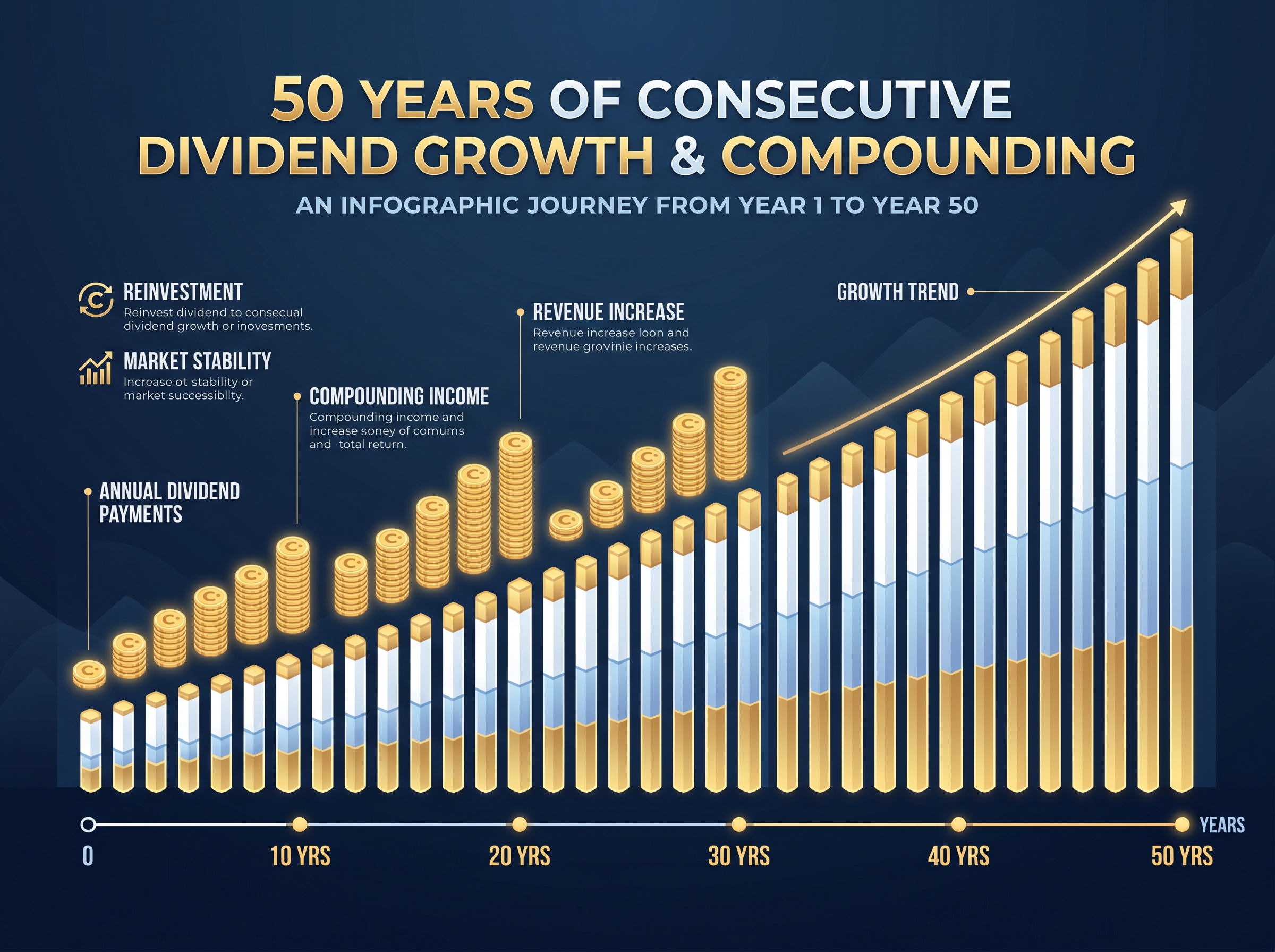
Dividend growth rate (DGR) measures how quickly the annual payment has grown. A stock yielding 2.5% today but growing its dividend at 10% per year will yield more than 6% on your original cost basis within 10 years — a "yield on cost" that a static high-yielder cannot match. Investors building 20+ year income portfolios should weight DGR at least as heavily as current yield.
"The best dividend investments combine a reasonable current yield with a long track record of growth — not the highest yield available. A yield supported by durable free cash flow is worth more than a yield twice as high supported by accounting maneuvers." — Morningstar Equity Research, April 2026
Best Dividend ETFs of April 2026
Dividend ETFs offer instant diversification across dozens or hundreds of dividend-paying companies, with expense ratios that have never been lower. For most investors, one or two dividend ETFs cover the entirety of what an individual stock portfolio achieves — at a fraction of the research cost and company-specific risk.
ETF Ticker Yield Expense Ratio 5-Year DGR Best For Schwab US Dividend Equity ETF SCHD 3.40% 0.06% 10.6% Income + growth balance Vanguard High Dividend Yield ETF VYM ~3.3% 0.06% Moderate Maximum diversification (400+ holdings) iShares Core Dividend Growth ETF DGRO 2.09% 0.08% 9.2% Long-term compounding, lower current yield ProShares S&P 500 Dividend Aristocrats ETF NOBL ~2.0% 0.35% High (25+ yr growth requirement) Dividend quality over yield
Data as of April 2026. Sources: Schwab Asset Management, Vanguard, iShares, Morningstar. Yields fluctuate daily with share price changes.
SCHD — Best Overall Dividend ETF
The Schwab U.S. Dividend Equity ETF (SCHD) is the most widely held dividend ETF in the United States for good reason. It tracks the Dow Jones U.S. Dividend 100 Index — a rules-based index that requires constituent companies to have paid dividends for at least 10 consecutive years and then ranks them on four quality factors: cash flow to total debt, return on equity, dividend yield, and five-year dividend growth rate. The result is a portfolio that skews toward financially strong, cash-generative companies rather than simply the highest yielders.
SCHD's performance record is exceptional: a 481% cumulative total return since inception in 2011, a 3.40% trailing yield, and a five-year dividend growth rate of 10.6% — meaning the annual payout has more than doubled since 2021. In March 2026, SCHD underwent its annual rebalancing, reducing energy exposure and adding positions in UnitedHealth Group, Abbott Laboratories, Procter and Gamble, Qualcomm, and Accenture. The fund's top holdings now trade at forward price-to-earnings ratios between 15 and 16 — well below the S&P 500's 22.5 multiple — providing a meaningful valuation margin of safety. At a 0.06% expense ratio, you pay $6 annually on a $10,000 investment.
VYM — Best for Diversification
Vanguard's High Dividend Yield ETF (VYM) holds 400+ dividend-paying companies, offering broader sector diversification than SCHD's more concentrated 100-stock portfolio. The yield is comparable at approximately 3.3%, and the expense ratio matches SCHD at 0.06%. VYM's larger holding count reduces single-company risk — no position typically exceeds 4% of the fund. For investors who want a one-fund dividend solution without concentrating in any sector or company, VYM's breadth makes it the more comfortable long-term hold.
DGRO — Best for Long-Term Compounding
The iShares Core Dividend Growth ETF (DGRO) targets companies with a consistent history of growing their dividends, with a starting yield of 2.09% — lower than SCHD or VYM today. The tradeoff is a superior 10-year annualized return of 13.86%, driven by holding companies in the earlier stages of their dividend growth trajectory. For investors with a 15+ year time horizon who can accept a lower starting income in exchange for faster growth, DGRO's historical total return edge is compelling. The slightly higher 0.08% expense ratio is immaterial.
Best Dividend Stocks of April 2026
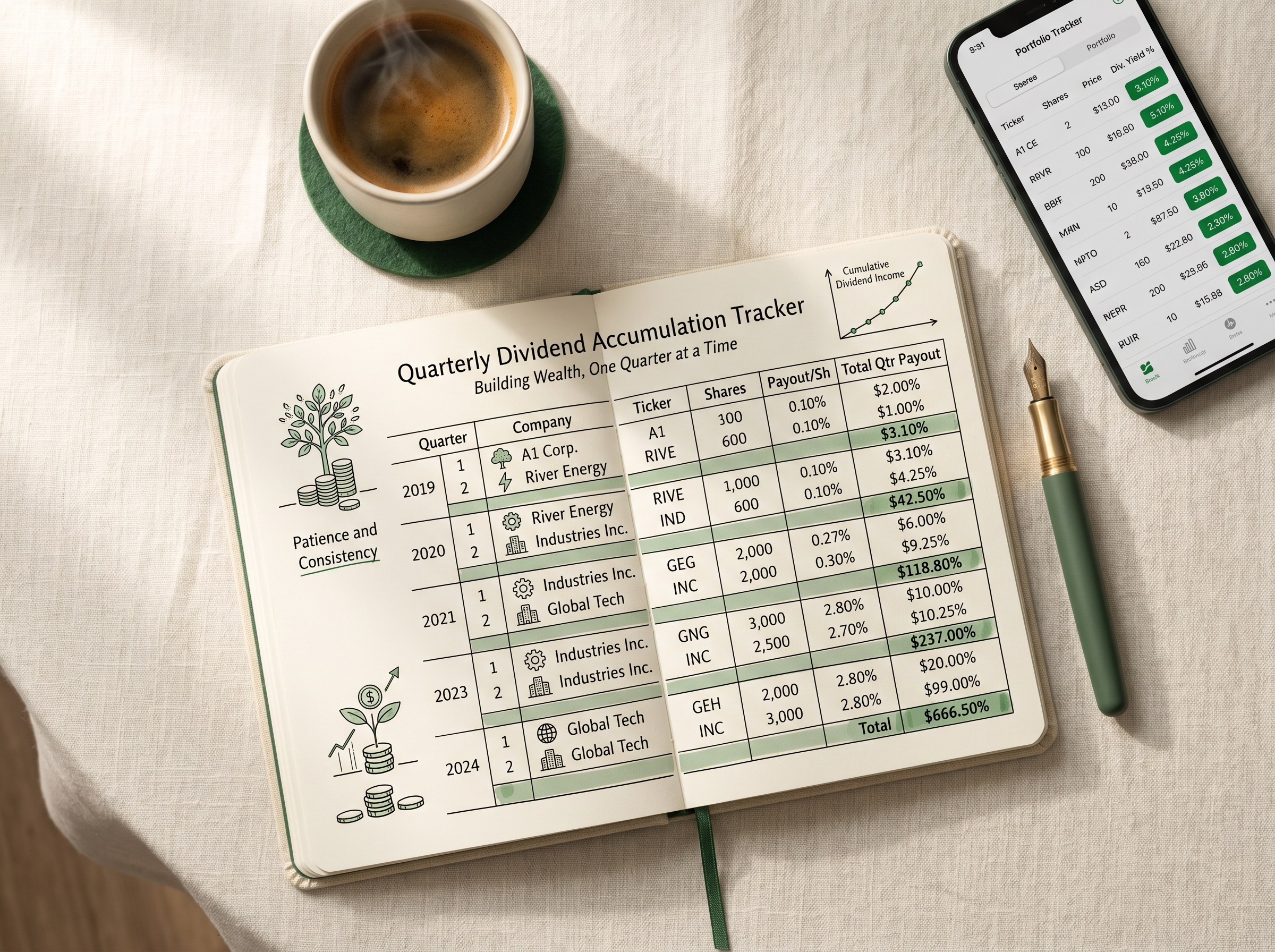
Individual dividend stocks offer higher yields than most ETFs, but require active monitoring of each company's fundamentals. The five stocks below represent different yield and risk profiles across sectors — each chosen for payout sustainability, not just headline yield.
Stock Ticker Yield Consecutive Increases Payout Frequency Best For AbbVie ABBV 3.3% 53 years Quarterly Dividend King, pharma stability Enbridge ENB 5.4% 31 years Quarterly Energy infrastructure income Realty Income O 5.0% 31 years Monthly Monthly income, REIT diversification Main Street Capital MAIN 5.9% 18 years Monthly Highest monthly yield with growth Vici Properties VICI 6.3% 7 years (since IPO) Quarterly Highest yield, leisure REIT exposure
Yields as of April 2026. Subject to change. Sources: Motley Fool, Seeking Alpha, company investor relations pages.
AbbVie (ABBV) — The Dividend King
AbbVie is one of 57 Dividend Kings — companies with 50 or more consecutive years of dividend increases — after raising its payout for the 53rd consecutive year. The pharmaceutical giant increased its dividend by 5.5% in late 2025, continuing a growth trajectory that has seen its total payout rise 330% since its 2013 spin-off from Abbott Laboratories. AbbVie's near-term risk is the continued erosion of Humira's revenue as biosimilar competition intensifies, but its pipeline — including Skyrizi and Rinvoq — has consistently offset that pressure. At 3.3% yield with a multi-decade growth record, ABBV occupies the "core quality" position in a dividend portfolio.
Realty Income (O) — The Monthly Dividend Company
Realty Income has paid a monthly dividend for over 30 consecutive years and increased it for 31 consecutive years — qualifying it as a Dividend Aristocrat. Its 5.0% yield is paid monthly, which matters for investors structuring a dividend income stream to cover regular expenses. The company owns approximately 15,400 properties across the US, UK, and Europe, leased to retailers and commercial tenants under long-term triple-net leases — structures where the tenant covers property taxes, insurance, and maintenance, providing Realty Income with highly predictable cash flows. Occupancy has never fallen below 96.6% in its modern history. The $8.5 trillion European net-lease market Realty Income has identified as its next expansion frontier provides meaningful long-term growth potential beyond its US core.
Enbridge (ENB) — Infrastructure Income
Enbridge operates over 18,000 miles of crude oil pipeline and 19,000 miles of natural gas pipeline in North America — infrastructure that charges tolls based on volume, not commodity prices. This structure means Enbridge's cash flows remain stable even through oil price volatility, providing the predictability that underpins its 31-year streak of dividend increases and 5.4% current yield. For Canadian investors, Enbridge is listed on both the TSX and NYSE, making it accessible in registered accounts on both sides of the border. Canadian investors holding ENB in a TFSA receive dividends without withholding tax; US investors holding it in a taxable account are subject to the standard 15% Canadian withholding tax (recoverable as a foreign tax credit on their US return).
Dividend Aristocrats and Dividend Kings: The Quality Filter
The Dividend Aristocrats are the 69 S&P 500 companies that have increased their dividend for at least 25 consecutive years as of 2026. The Dividend Kings are the 57 companies — not required to be in the S&P 500 — that have done so for 50 or more consecutive years. Both lists include names from Johnson and Johnson and Coca-Cola to more obscure industrial and consumer companies. These lists function as quality filters, not buy lists: a company that has raised its dividend through five recessions, two tech crashes, and a global pandemic is demonstrably a different business than one that started paying a dividend in a bull market. Membership in either list does not guarantee future performance, but it does confirm a management track record of prioritizing shareholder returns under pressure.
The ProShares S&P 500 Dividend Aristocrats ETF (NOBL) provides a single-fund route to owning the entire Aristocrats list with equal weighting — no company starts above roughly 2% of the portfolio. Its 0.35% expense ratio is higher than SCHD or VYM, but the equal-weight methodology prevents any one company from dominating the fund's results.
Dividend Investing in the US, UK, Canada, and Australia: Tax Rules That Change Your Return
Tax treatment of dividends varies significantly across Tier 1 markets and can materially affect the after-tax yield you actually receive.
United States: Qualified dividends — paid by US corporations and most foreign corporations on shares held for at least 61 days around the ex-dividend date — are taxed at 0%, 15%, or 20% depending on taxable income (compared to up to 37% for ordinary income). Dividends from REITs, business development companies (BDCs), and master limited partnerships are generally classified as ordinary income. Holding dividend stocks inside a Roth IRA eliminates tax on all dividends and capital gains permanently.
United Kingdom: Dividend income in the UK benefits from a £500 annual tax-free allowance in 2026/27 (reduced from £1,000 in 2025/26). Above that allowance, basic-rate taxpayers pay 8.75%, higher-rate taxpayers pay 33.75%, and additional-rate taxpayers pay 39.35% on dividends. Holding dividend ETFs inside a Stocks and Shares ISA eliminates dividend tax entirely — the most straightforward optimization available to UK dividend investors. UK investors holding US dividend stocks or ETFs also face a 15% US withholding tax on dividends, which can typically be recovered as a foreign tax credit.
Canada: Canadian eligible dividends receive the dividend tax credit, which significantly reduces the effective tax rate — in some provinces, eligible dividends are taxed at rates below 10% for investors in the lowest income brackets. Dividends held inside a TFSA are tax-free; dividends held in an RRSP are taxed as ordinary income on withdrawal. Foreign dividends (from US or Australian stocks) do not qualify for the dividend tax credit and are taxed as ordinary income, with foreign withholding tax typically creditable against Canadian tax.
Australia: Dividends from Australian companies frequently come with franking credits — tax offsets representing the 30% corporate tax already paid by the company. Fully franked dividends can result in refunds for investors whose marginal tax rate is below 30%, effectively making high-yield Australian dividend stocks more attractive to low- and middle-income investors than their headline yield suggests. Dividends from international stocks and global ETFs do not carry franking credits and attract a 15% withholding tax at source (under Australia's tax treaties), creditable against Australian tax. The 50% Capital Gains Tax discount applies to shares held for more than 12 months, which interacts importantly with total-return strategies that combine dividend income with capital appreciation.
Frequently Asked Questions
Q: What is a good dividend yield in 2026?
Context matters more than any single number. The S&P 500 yields approximately 1.2% on average in April 2026 — so a 3% yield represents meaningful income relative to the market. A yield between 3% and 5% on a financially healthy company with a history of increases is generally considered attractive without being in warning territory. Yields above 6% require careful scrutiny of the payout ratio and recent earnings trend — they may reflect genuine income opportunity or a stock price that has fallen because the business is under stress. The payout ratio and consecutive-years-of-increase track record are always better predictors of safety than the yield number alone.
Q: Is it better to invest in dividend ETFs or individual dividend stocks?
For most investors, dividend ETFs are the superior choice. A fund like SCHD holds 100 quality dividend stocks, rebalances automatically, and costs $6 per year per $10,000 invested. Replicating that diversification through individual stocks requires monitoring 100 separate companies, reinvesting dividends manually, and making sell decisions when a company cuts its payout. Individual stocks make sense when you have a high conviction view on a specific company's dividend sustainability, want the higher yields available on individual REITs or BDCs, or need to customize your tax situation in ways a fund cannot accommodate.
Q: What happens to dividends during a stock market crash?
Dividend Aristocrats and Kings have a strong historical record during downturns. Because membership requires 25+ or 50+ consecutive years of increases, any company that cut its dividend in the 2008 financial crisis, the 2020 COVID crash, or the 2022 inflation shock was removed from the list. The remaining members had the financial strength and management commitment to maintain and grow payouts through all of those events. Individual dividend stocks without that track record are significantly more vulnerable to cuts during recessions — which is why yield alone is a dangerous screening criterion.
Q: Can I live off dividend income?
Yes, though the portfolio size required is larger than most people estimate. At a 4% blended yield — achievable with a mix of SCHD and individual dividend stocks — you need $25,000 in capital for every $1,000 of annual income. Generating $60,000 per year in dividend income requires approximately $1.5 million invested. Building toward that level through consistent contributions, dividend reinvestment, and compounding over 20 to 30 years is realistic. Using dividend reinvestment plans (DRIPs) to automatically buy additional shares with each payout accelerates compounding significantly in the accumulation phase.
Q: Should I reinvest dividends or take them as cash?
During the accumulation phase — when you are building wealth rather than spending it — reinvesting dividends through a DRIP is almost always the better choice. Reinvested dividends buy additional shares that generate their own dividends, compounding your income exponentially over time. In the distribution phase — when you are drawing from the portfolio to fund retirement or living expenses — taking dividends as cash provides a natural income stream without requiring you to sell shares. The transition from reinvestment to distribution is one of the most consequential decisions in retirement planning and worth discussing with a financial advisor before implementing.
The Bottom Line
Dividend investing is not about finding the highest yield — it is about finding income that grows reliably through economic cycles. For most investors, SCHD provides the cleanest solution: a 3.40% yield, a 10.6% annual dividend growth rate, and a 481% cumulative total return since 2011, all for $6 per year per $10,000 invested. Investors who want higher current income can combine SCHD with a position in Realty Income or Main Street Capital for a blended yield approaching 4% to 5% with monthly payment cadences on the stock allocation.
The worst dividend mistake is yield chasing — buying a 9% yielder from a company with a 95% payout ratio and declining earnings, only to watch the dividend get cut and the stock price follow it down. The Dividend Aristocrats and Kings framework exists precisely to prevent that outcome. Use it as your first filter, not your last. Before building out your income portfolio, make sure your growth core is also working — our guide to the best S&P 500 ETFs of 2026 covers the low-cost index foundation that dividend positions should complement, not replace.
Disclaimer: This article is for informational purposes only and does not constitute personalized financial, investment, legal, or tax advice. Dividend yields are subject to change and past dividend history does not guarantee future payments. Always consult a qualified financial and tax professional before making investment decisions.
Sources
Morningstar. "The 10 Best Dividend Stocks for 2026." April 2026. Link
Sure Dividend. "2026 Dividend Kings List — All 57 Analyzed." April 2026. Link
Sure Dividend. "2026 Dividend Aristocrats List — All 69 Analyzed." April 2026. Link
24/7 Wall St. "SCHD vs VYM vs DGRO: Which Dividend ETF Is Best for Retirees in 2026?" April 2026. Link
Seeking Alpha. "SCHD: A Double Play On Yield And Growth In 2026." 2026. Link
Motley Fool. "The Best High-Yield Dividend Stocks to Buy for 2026 and Beyond." April 2026. Link
Schwab Asset Management. "SCHD — Schwab U.S. Dividend Equity ETF." April 2026. Link
Seeking Alpha. "Top 25 High-Yield Dividend Stocks For April 2026." April 2026. Link
Morningstar Australia. "Tax implications when investing in overseas shares and ETFs." 2026. Link
TipRanks. "SCHD vs. VYM — Which Dividend ETF Wins the 2026 Yield Battle?" 2026. Link