Best Checking Accounts of April 2026: No Fees, High Rates
Most checking accounts pay just 0.07% APY. The best of April 2026 pay 4.50% with zero fees. Here's exactly which account fits your situation.
Key Takeaways
The national average interest rate on a standard interest-bearing checking account is just 0.07% APY — but the best high-yield checking accounts now offer up to 4.50% APY with no monthly fees.
60% of Americans overdrew their checking account at least once in the past year, paying an average overdraft fee of $26.77 per incident and up to $380 per year in total fees.
Chime won NerdWallet's 2026 Best Overall Checking Account award for its zero fees, 47,000+ free ATMs, and early paycheck access; SoFi won Best Overall Bank with a 0.50% APY and up to a $400 sign-up bonus.
Capital One, Citibank, and Ally Bank have all eliminated overdraft fees entirely. A proposed CFPB rule to cap overdraft fees at $5 was overturned by Congress before taking effect.
In the UK, Nationwide FlexDirect pays 5% AER on balances up to £1,500 for 12 months — the highest rate among mainstream current accounts.
Your checking account is the financial hub of your life — every paycheck lands there, every bill leaves from there, and every overdraft fee chips away at money you should be keeping. Yet most Americans earn virtually nothing on their balances: the national average interest rate on interest-bearing checking accounts sits at just 0.07% APY, according to Federal Deposit Insurance Corporation data. Meanwhile, the best online checking accounts now pay 4.50% APY or more, charge zero monthly fees, and give you access to more ATMs than any big-box bank branch network ever could.
The checking account market shifted sharply between 2024 and 2026. Three major US banks — Capital One, Citibank, and Ally Bank — eliminated overdraft fees entirely, a move driven by regulatory pressure and fintech competition. A proposed Consumer Financial Protection Bureau rule that would have capped overdraft fees at $5 for large banks was overturned by Congress, meaning fee structures remain highly variable. The practical takeaway for consumers: the gap between the best and worst checking accounts has never been wider, and switching has never been easier.
In this guide, we rank the best checking accounts of April 2026 by category — best overall, best for high yield, best for no fees, and best for ATM access — and explain what renters, earners, and savers in the US, UK, Canada, and Australia should look for before opening an account.
What to Look for in a Checking Account in 2026
Not all checking accounts are created equal, and the feature that matters most depends on how you use money day to day. Before comparing specific accounts, it helps to understand the five metrics that separate great checking accounts from mediocre ones.
Monthly fees are the first thing to eliminate. No-fee checking accounts are now the standard among online banks and credit unions. Any account that charges a monthly maintenance fee without a clear waiver path (such as a direct deposit requirement) is worth skipping entirely. ATM access matters if you regularly use cash. The best accounts reimburse out-of-network ATM fees or maintain a network of 50,000+ fee-free ATMs. Interest rate (APY) on your everyday balance is increasingly relevant now that high-yield checking products have emerged as a genuine category. Even a 1.00% APY on a $5,000 average balance earns $50 per year — not life-changing, but meaningfully better than $3.50. Overdraft policy is where banks quietly extract billions from their lowest-income customers; accounts that offer fee-free overdraft protection or automatic transfers from a linked savings account are worth prioritising. Finally, early direct deposit — the ability to access your paycheck up to two days before the official pay date — has become a standard feature at most online institutions and is genuinely useful for cash-flow management.
"60% of Americans overdrew their debit card or checking account at least once in the past year, with the typical affected household paying $380 annually in overdraft fees." — U.S. News Payments Survey, 2025
Best Checking Accounts of April 2026: Full Comparison
The following table covers the top checking accounts available to US residents as of April 2026, evaluated on monthly fees, interest rate, ATM network size, and standout features. All accounts listed have no monthly maintenance fee on at least their base tier.
Account Monthly Fee APY ATM Network Best For Chime Checking $0 N/A 47,000+ Best overall — no fees, early pay SoFi Checking & Savings $0 0.50% 55,000+ (Allpoint) Sign-up bonus up to $400 Axos Essential Checking $0 0.07% 90,000+ (unlimited reimbursement) Best for ATM access Discover Cashback Checking $0 N/A 60,000+ Cash-back on debit purchases Connexus Xtraordinary $0 4.50%* Limited Best yield (qualifications required) Bask Bank Interest Checking $0 Competitive 55,000+ (Allpoint) Interest + no minimum balance Ally Interest Checking $0 0.10–0.25% 43,000+ (Allpoint) No overdraft fees, reliable service
*Connexus 4.50% APY applies to balances up to $25,000 with qualifying monthly debit card transactions. Data as of April 2026. Rates and features subject to change — verify directly with each institution before opening an account. Sources: NerdWallet, Bankrate, WalletHub.
Chime Checking — Best Overall
Chime has earned its place at the top of nearly every major 2026 checking account ranking, including NerdWallet's Best Overall Checking Account award. There is no monthly fee, no minimum balance requirement, and no overdraft fee — Chime's SpotMe feature covers debit card purchases up to $200 for eligible members with no charge. Its 47,000+ ATM network through MoneyPass and Visa Plus Alliance covers most US markets. The headline feature for many users is paycheck access up to two days early with direct deposit — a genuine cash-flow advantage for workers paid bi-weekly.
SoFi Checking & Savings — Best for New Customers
SoFi bundles checking and savings into a single product, earning 0.50% APY on the checking balance and a higher rate on savings. New members who set up direct deposit within 30 days of account opening receive a one-time cash bonus of $50–$400 depending on the deposit amount — one of the strongest sign-up incentives in the market. With access to more than 55,000 Allpoint ATMs and no monthly fees, SoFi is an easy recommendation for anyone opening their first online bank account.
Axos Essential Checking — Best for ATM Users
Axos is the winner for frequent cash users. Its Essential Checking account reimburses every domestic ATM fee, every month, with no cap — meaning you can withdraw cash at any machine in the country and pay nothing. The network itself spans more than 90,000 ATMs, already the largest of any bank listed here. There are no monthly fees, no overdraft fees, and no NSF (non-sufficient funds) fees. For anyone who travels domestically and regularly needs cash, this account is difficult to beat.
Connexus Xtraordinary Checking — Best High-Yield
Connexus Credit Union's Xtraordinary Checking account pays 4.50% APY on balances up to $25,000 — among the highest rates available on any checking account in April 2026. There is no monthly fee and no minimum opening deposit, but to qualify for the top rate, account holders must complete a set number of debit card transactions per month and opt in to e-statements. For savers who are willing to meet these requirements, this account effectively turns an everyday checking account into a high-yield savings vehicle with daily liquidity.
How to Switch Checking Accounts Without Missing a Payment: Step-by-Step
The most common reason people stay with a bank they dislike is fear of the switching process. In reality, switching takes less than 30 minutes of active effort spread over two weeks.
Step 1: Open the new account first — Apply for the new checking account before closing the old one. Most online banks approve applications in under five minutes. Fund the new account with a small transfer ($100–$500) to activate it and confirm it works.
Step 2: List every automatic payment and deposit — Spend 10 minutes reviewing the last two months of statements. Write down every recurring debit (subscriptions, utilities, insurance, loan payments) and every direct deposit source (employer, government payments, freelance clients).
Step 3: Update direct deposit — Notify your employer's payroll department of your new account and routing numbers. Most payroll updates take one to two pay cycles to process. Keep the old account open and funded during this period.
Step 4: Switch automatic payments one by one — Update billing information for each recurring payment over one to two weeks. Do not rush this step — a missed payment due to a closed account can trigger late fees or service interruptions.
Step 5: Wait for one full pay cycle — Confirm that at least one paycheck has landed in the new account and all automatic payments have processed correctly before closing the old account.
Step 6: Close the old account formally — Contact your old bank in writing (email or secure message) to request account closure. Do not simply stop using the account — some banks charge dormancy fees, and small pending transactions can go unnoticed.
Pro Tip: Many banks offer a "switch kit" that automates the process of updating direct deposits and recurring payments. SoFi, Chime, and Ally all provide switch assistance tools within their apps — use them to save time.
Pros and Cons of Online Checking Accounts vs. Traditional Banks
Online-only checking accounts dominate the top of every 2026 comparison list, but traditional banks still offer features that matter to some customers.
Advantages of Online Checking Accounts
No monthly fees — Online banks have dramatically lower operating costs than branch-based banks, and they pass the savings along as eliminated fees and higher interest rates.
Larger ATM networks — By partnering with networks like Allpoint, MoneyPass, and Visa Plus Alliance, online banks give customers access to more free ATMs than most traditional banks maintain in branches.
Higher interest rates — The best online checking accounts pay 0.50–4.50% APY, versus 0.07% at the average brick-and-mortar bank.
Better mobile apps — Fintech-first banks (Chime, SoFi, Ally) typically offer superior app interfaces, instant spending notifications, and built-in budgeting tools.
Disadvantages of Online Checking Accounts
No physical branches — If you regularly deposit cash, need notary services, or prefer face-to-face banking, an online-only account creates friction.
Cash deposits are complicated — Most online banks do not accept cash directly. Customers typically have to use a retailer like Walgreens or CVS (Green Dot network) for cash deposits, which may involve a fee.
Customer service is remote — Support is phone, chat, or email only. Complex issues like fraud investigations or wire transfers may take longer to resolve without an in-person relationship.
Variable feature sets — Smaller online banks may lack features like checkbooks, notarized letters, or international wire capabilities that traditional banks offer.
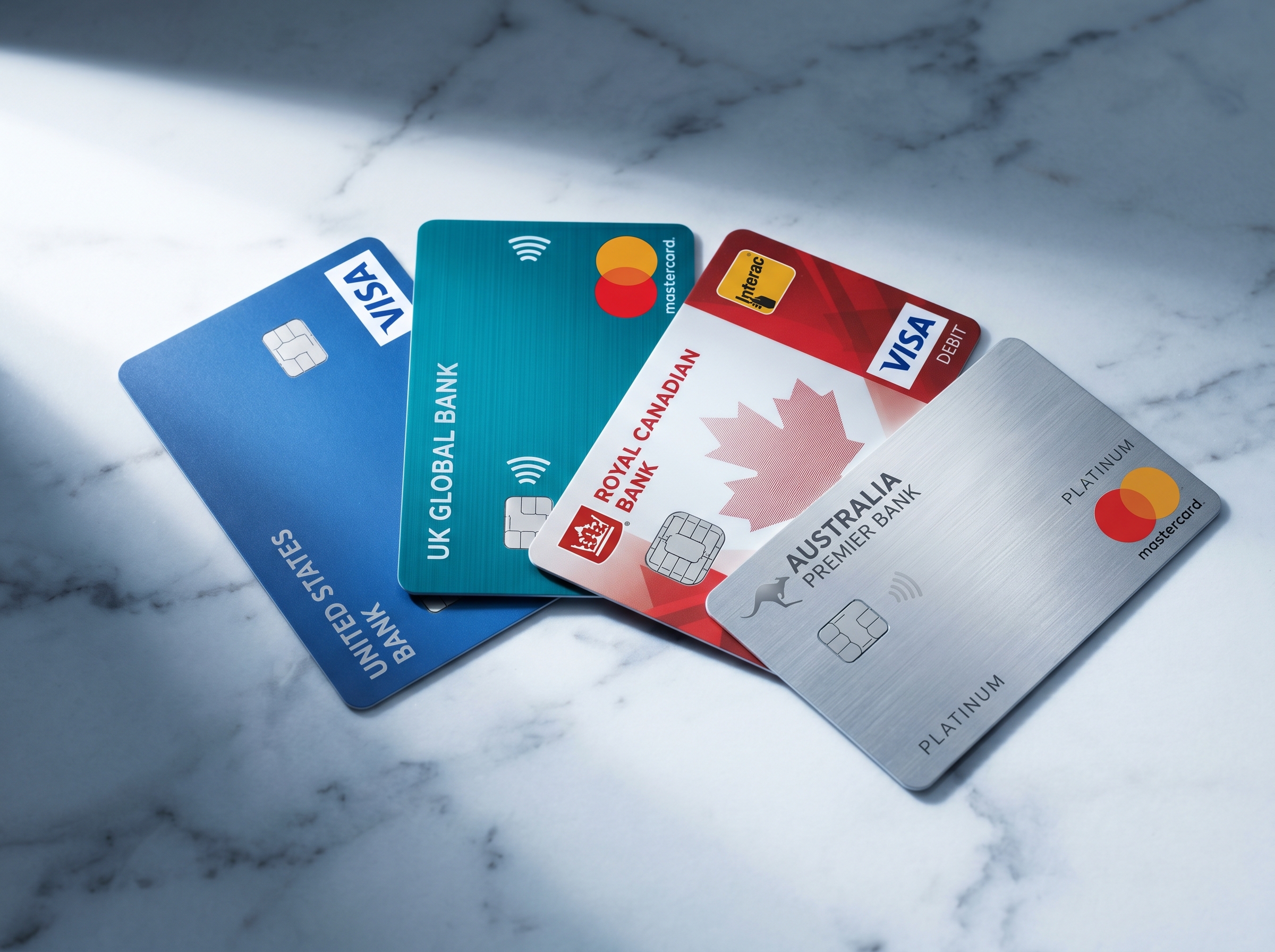
Checking Accounts in the US, UK, Canada, and Australia: What's Different
The concept of an everyday transactional bank account is universal across Tier 1 markets, but the product name, features, and competitive landscape vary meaningfully by country.
In the United States, "checking accounts" are the standard term. FDIC insurance protects deposits up to $250,000 per depositor, per institution. The competitive pressure from fintechs like Chime and SoFi has forced traditional banks to eliminate or reduce many fees that were standard as recently as 2022.
In the United Kingdom, the equivalent is a current account. The market is regulated by the Financial Conduct Authority (FCA), and deposits up to £85,000 are protected under the Financial Services Compensation Scheme (FSCS). Nationwide FlexDirect currently leads on interest, paying 5% AER on balances up to £1,500 for the first 12 months — the highest rate among mainstream UK current accounts. Starling Bank and Chase UK (the UK arm of JPMorgan) are strong options for fee-free digital banking with no foreign transaction charges, making them particularly useful for frequent travellers. Several UK banks also offer switching incentives of £100–£210 in cash bonuses for new customers who transfer their account.
In Canada, these accounts are called chequing accounts, and approximately 97% of Canadians hold at least one. The Big Six banks (RBC, TD, Scotiabank, BMO, CIBC, National Bank) dominate the market but typically charge monthly fees of C$4–$16.95. No-fee alternatives include Tangerine (owned by Scotiabank), Simplii Financial (owned by CIBC), and EQ Bank. The Financial Consumer Agency of Canada (FCAC) requires all major banks to offer a low-cost basic account capped at C$4 per month. Deposits are protected by the Canada Deposit Insurance Corporation (CDIC) up to C$100,000 per category.
In Australia, everyday accounts are called transaction accounts or everyday accounts. ASIC regulates the sector, and deposits up to A$250,000 are guaranteed by the Australian Government Financial Claims Scheme. ING, UBank, and Up Bank are standout options for no-fee accounts with competitive features. ING Orange Everyday reimburses all ATM fees worldwide when monthly criteria are met. Australian transaction accounts rarely offer meaningful interest; the better strategy is to pair a transaction account with a high-interest savings account (currently paying up to 5.65% AER with bonus rates). The Reserve Bank of Australia's cash rate decisions directly influence savings rates but have limited impact on transaction account rates.
Frequently Asked Questions
Q: Are online checking accounts safe?
Yes. Online checking accounts offered by FDIC-member banks are insured up to $250,000 per depositor, per institution — the same protection as traditional bank accounts. Chime, SoFi, Axos, Discover, and Ally are all FDIC-insured through their banking partners. Before opening any online account, verify FDIC membership at the FDIC's BankFind tool at fdic.gov.
Q: What is the difference between a checking account and a savings account?
A checking account is designed for frequent transactions — paying bills, making purchases, and withdrawing cash. A savings account is designed to hold money you do not need immediately, typically earning a higher interest rate. The best financial strategy combines both: a no-fee checking account for day-to-day spending and a high-yield savings account earning 4%+ APY for your emergency fund and short-term goals.
Q: How do I avoid overdraft fees on my checking account?
The most reliable strategies are maintaining a buffer balance (at least $200–$500 above your typical monthly minimum), setting up low-balance alerts via your bank's app, and enabling free overdraft protection that links your checking to a savings account. Choosing a bank that has eliminated overdraft fees entirely — Chime, Ally, Capital One, or Axos — is the simplest solution. Avoid banks that charge $30–$35 per overdraft, especially if your balance fluctuates regularly.
Q: Can I earn high interest in a checking account?
Yes, but it usually requires meeting monthly qualifications such as a minimum number of debit card transactions or a direct deposit requirement. Connexus Credit Union's Xtraordinary Checking pays 4.50% APY on balances up to $25,000 with these conditions met. If you do not want to track requirements, a standard high-yield savings account will consistently offer better rates without conditions than most high-yield checking products.
Q: What is early direct deposit and how does it work?
Early direct deposit allows you to access your paycheck up to two days before your official pay date. Most online banks receive ACH payroll files from employers one to two business days before the settlement date and make those funds available immediately rather than waiting. Banks including Chime, SoFi, and Ally offer this feature at no charge. It does not require any special setup beyond directing your employer's payroll to your account.
The Bottom Line
The best checking account in 2026 charges nothing, pays something, and gets out of your way. Chime is the easiest recommendation for most US earners who want a simple, fee-free experience with early paycheck access. If you want to earn interest on your everyday balance without moving money into a separate savings account, Connexus Xtraordinary Checking at 4.50% APY is unmatched — provided you can meet the monthly debit card requirements. New customers willing to set up direct deposit should consider SoFi to capture the $50–$400 welcome bonus before settling on a long-term home for their money.
Once your checking account is optimised, the next step is putting your savings to work. Read our guide to high-yield savings accounts to find rates of 4%+ APY on your emergency fund, and explore our guide to money market accounts for short-term savings with chequing-like flexibility.
Disclaimer: This article is for informational purposes only and does not constitute personalised financial, banking, legal, or tax advice. Interest rates, account features, and fee structures change frequently. Always verify current terms directly with each institution before opening an account.
Sources
NerdWallet. "10 Best Checking Accounts for April 2026." NerdWallet, April 2026. Link
Bankrate. "Best Checking Accounts of April 2026." Bankrate, April 2026. Link
WalletHub. "Best Checking Accounts of April 2026 — up to 8.00% APY." WalletHub, April 2026. Link
U.S. News & World Report. "Checking Account Statistics (2026)." WalletHub, 2026. Link
CoinLaw. "Bank Overdraft Fee Statistics 2026." CoinLaw, 2026. Link
MoneySavingExpert. "Best Current Accounts — April 2026." MoneySavingExpert, April 2026. Link
Financial Consumer Agency of Canada. "Compare Bank Accounts." FCAC, 2026. Link