Best Car Insurance Companies of April 2026: Top Rates Compared
The best car insurance companies of April 2026, ranked by price and service. Find the cheapest rates for US, UK, Canada, and Australia drivers.
Key Takeaways
The national average cost of full coverage car insurance in the US is approximately $2,497 per year in April 2026 — but rates vary from $1,505 in Vermont to $4,246 in Maryland, making comparison shopping essential.
USAA is nearly always the cheapest car insurance company in every state at $128 per month for full coverage — but it is only available to military members, veterans, and their families.
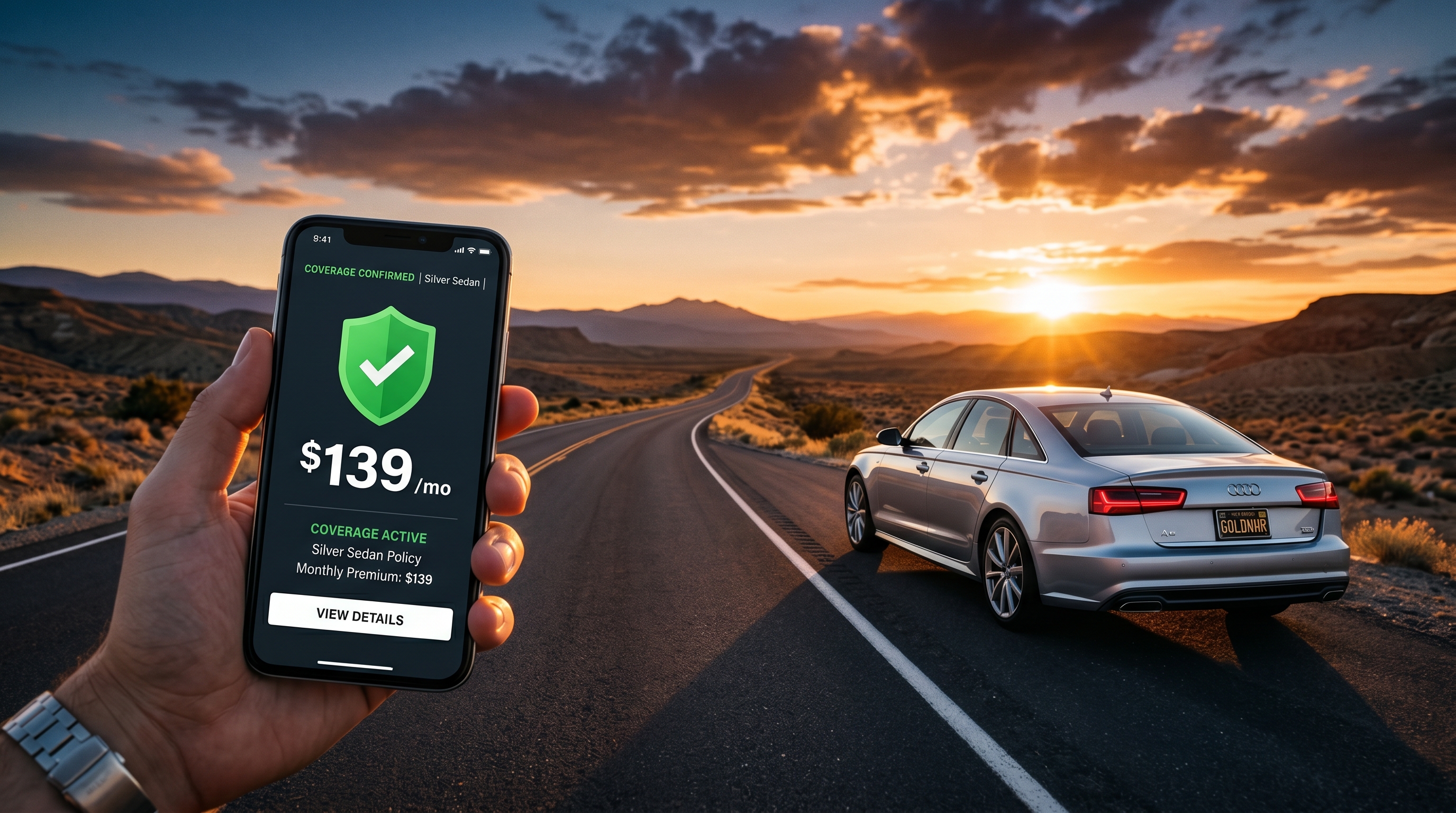
Travelers offers the lowest full coverage rate among large insurers open to all drivers at $139 per month ($1,664 per year), according to NerdWallet's April 2026 analysis.
Bundling your car insurance with home or renters insurance from the same provider delivers 10%–25% in average savings — one of the single most effective premium-reduction strategies available.
UK drivers pay an average of £559 annually (Q4 2025); Australian drivers can save up to A$692 by comparing providers through platforms like Canstar or Finder.
Car insurance premiums surged 26% between 2022 and 2024 — one of the largest two-year spikes on record — driven by rising repair costs, supply chain disruptions inflating parts prices, and a wave of catastrophic weather events. After a 6% decline in 2025, rates have stabilised in 2026, with Insurify projecting a modest 1% increase by year-end. That relative calm creates an ideal window to shop: insurers are competing for customers, comparison platforms have more pricing data than ever, and the gap between the cheapest and most expensive insurer for an identical driver can exceed $1,500 per year.
Most drivers renew their car insurance on autopilot, handing their existing insurer a loyalty premium — the industry term for the quiet rate increase applied to customers who do not shop around. According to Consumer Reports data, drivers who actively compared quotes at renewal saved an average of $461 per year. That is money sitting on the table every time your policy renews.
This guide covers the best car insurance companies of April 2026, ranked by price, customer satisfaction, and coverage quality, with dedicated guidance for drivers in the UK, Canada, and Australia.
Average Car Insurance Costs in 2026: What You Should Expect to Pay
Before comparing providers, it helps to understand what a competitive rate looks like for your situation. The national average full coverage premium in the US is approximately $2,497 per year in April 2026, but that figure masks enormous state-by-state variation. Vermont drivers pay an average of $1,505 annually — the cheapest in the nation. Maryland drivers face the highest average at $4,246. Nevada and Louisiana saw rates nearly double year-over-year, driven by extreme weather claims and litigation costs specific to those markets.
Full coverage (liability + collision + comprehensive) is appropriate for most drivers with a car worth more than $5,000 or with an outstanding auto loan. Liability-only coverage meets the minimum legal requirement in most states and costs significantly less — GEICO's average liability-only rate is $41 per month nationwide — but leaves you personally responsible for damage to your own vehicle after an at-fault accident.
Best Car Insurance Companies of April 2026
Company Avg. Full Coverage/Month Avg. Min Coverage/Month J.D. Power Score Best For USAA $128 $36 726 (highest) Military families — lowest rates overall Travelers $139 N/A 684 Cheapest full coverage for all drivers GEICO ~$160 $41 692 Most discounts (23 categories), best app State Farm $169 $54 710 Best overall — balance of price and service Auto-Owners ~$155 N/A 712 Best claims satisfaction Nationwide ~$162 N/A 698 Best telematics programme (SmartRide)
Data as of April 2026. Average monthly premiums are national averages and vary significantly by state, driving record, vehicle type, and coverage level. J.D. Power scores from the 2025 U.S. Auto Insurance Study. Sources: NerdWallet, Bankrate, ValuePenguin, J.D. Power.
Company Reviews: Who Should Choose What
USAA — Best Rates in the Nation (Military Only)
USAA is almost universally the cheapest car insurance company in every state it operates in, with an average full coverage rate of $128 per month — roughly $492 per year less than the national average. Its customer satisfaction scores are consistently the highest in the industry: a J.D. Power score of 726 places it well above every competitor. The catch: USAA is available only to active and former military members, veterans, and immediate family members. If you or a family member qualifies, USAA should be your first quote, every time.
Travelers — Best Full Coverage Rate for All Drivers
Travelers is the cheapest large auto insurer available to all drivers for full coverage, averaging $139 per month ($1,664 per year) according to NerdWallet's April 2026 analysis. That is $833 per year less than the national average. Travelers also rated as NerdWallet's top-ranked car insurance company overall in March 2026, reflecting a strong combination of pricing, financial stability, and coverage options. It does not have the largest agent network, but its online and app-based service is solid for straightforward claims.
GEICO — Best for Discounts and Digital Experience
GEICO offers 23 distinct discount categories — the most of any insurer analysed — spanning safe driver history, vehicle safety features, military and federal employee status, multi-policy bundling, early renewal, good student, and paperless billing. Its average liability-only rate of $41 per month ($494 per year) is the lowest among large national insurers. GEICO operates almost entirely online and through its app, making it an efficient choice for drivers who never want to speak to an agent but want access to aggressive pricing and a wide discount menu.
State Farm — Best Overall for Most Drivers
State Farm is the largest auto insurer in the US by market share and earns consistent top marks for the combination of competitive pricing ($169 per month average full coverage), agent availability (the widest physical network in the country), and customer service. Its Drive Safe & Save telematics programme tracks your driving habits and offers discounts of up to 30% for safe drivers. For drivers who value both in-person agent access and digital tools, State Farm offers the best of both.
Auto-Owners — Best Claims Satisfaction
Auto-Owners consistently receives among the highest J.D. Power claims satisfaction scores in the industry. For drivers who prioritise a smooth, frictionless claims experience above all else — particularly those in states where weather or accident risk is higher — Auto-Owners' reputation for prompt, fair settlement is worth a modest premium above the cheapest available rate. It is available in 26 states and operates exclusively through independent agents.
Nationwide — Best Telematics Programme
Nationwide's SmartRide programme offers up to 15% off immediately at sign-up — before the company has even measured your driving — and up to 40% off at renewal for safe driving habits. Critically, Nationwide guarantees that SmartRide data will never be used to increase your rate, which is not the case with all telematics programmes. If you are a low-mileage driver who commutes infrequently or drives during off-peak hours, telematics insurance can be one of the most effective premium reduction strategies available.
"The single best thing most drivers can do right now is get three quotes at renewal — takes 15 minutes online and saves the average shopper over $460 per year. Loyalty is not rewarded in auto insurance; shopping is." — Mark Friedlander, Director of Corporate Communications, Insurance Information Institute, 2026
7 Proven Ways to Lower Your Car Insurance Premium in 2026
Bundle home and auto insurance — Combining your car policy with home, renters, or condo insurance from the same provider delivers 10%–25% in average savings across both policies. This is consistently the highest-value single action for most policyholders.
Enrol in a telematics programme — Safe, low-mileage drivers can save 15%–40% through apps like Nationwide SmartRide, USAA SafePilot, or State Farm Drive Safe & Save. If you drive under 7,500 miles per year, telematics is almost always worth enabling.
Pay annually rather than monthly — Almost every insurer offers a meaningful discount for paying the full six-month or twelve-month premium upfront. The effective annual return on this pre-payment is often 8%–12%.
Increase your deductible — Raising your collision deductible from $500 to $1,000 typically reduces your premium by 10%–15%. This makes sense if you have sufficient savings to cover the higher deductible in the event of an at-fault accident.
Shop at every renewal — without exception — Set a calendar reminder to compare quotes 30 days before each renewal date. The loyalty premium charged to non-shopping customers compounds over years into thousands of dollars.
Ask about every applicable discount — Good student (B average or better), low mileage, defensive driving course, paperless billing, autopay, and new car discounts are frequently unclaimed because drivers simply did not ask.
Drop collision and comprehensive on older vehicles — If your car's market value is below $4,000–$5,000, the annual cost of collision and comprehensive coverage may exceed the maximum payout after the deductible. Run the maths before your next renewal.
Important: Telematics programmes that monitor hard braking, rapid acceleration, and late-night driving can increase your premium by up to 40% if the data reveals risky habits. Only enrol if you are confident in your driving behaviour, and check your insurer's terms on whether collected data can be used to raise rates.
Car Insurance in the UK, Canada, and Australia
United Kingdom: The average UK car insurance premium fell to approximately £559 annually in Q4 2025 — down from record highs above £600 in 2024 — after the Financial Conduct Authority's intervention on loyalty pricing and an easing of repair cost inflation. The FCA's general insurance pricing rules prohibit insurers from charging renewing customers more than equivalent new customers for the same policy, which structurally limits the loyalty penalty that exists in the US market. Aviva holds Which?'s Recommended Provider status with an 81% customer satisfaction score. UK drivers should always use comparison sites — Compare the Market, GoCompare, and MoneySuperMarket — before renewing directly, as prices vary by hundreds of pounds for identical coverage.
Canada: Canadian car insurance is provincially regulated, which creates enormous geographic variation. Ontario drivers pay the highest average premiums in the country — approximately C$1,800–2,000 per year — driven by high fraud rates and litigation costs. British Columbia and Manitoba operate government-run monopoly insurers (ICBC and MPI respectively), which limits private competition but provides more predictable pricing. In provinces with private insurance markets (Ontario, Alberta, Atlantic provinces), Intact Financial, TD Insurance, and Aviva Canada are the three largest providers. Quebec's hybrid system covers bodily injury through a government plan and property damage through private insurers.
Australia: Australian car insurance is divided between comprehensive cover (collision, theft, fire, weather, and third-party damage) and compulsory third-party (CTP) insurance, which covers personal injury and is legally required in every state. CTP is often purchased separately from a state-approved provider. For comprehensive cover, Budget Direct won Finder's 2026 Best Value Award and consistently quotes the lowest premiums for comprehensive cover nationally. Canstar data shows that comparing providers can save Australian drivers up to A$692 annually. RACV, NRMA, and Allianz are strong alternatives, particularly for drivers who value brand trust and local claim support over pure pricing.
Frequently Asked Questions
Q: How much car insurance do I actually need?
At minimum, you need liability coverage that meets your state's legal requirement — but the state minimums are typically too low to cover a serious at-fault accident. Most financial advisors recommend at least $100,000 per person and $300,000 per accident in liability coverage. If your net worth exceeds $300,000, consider an umbrella policy that provides an additional $1 million or more in liability coverage for approximately $200–$300 per year. Full coverage (adding collision and comprehensive) is advisable for any vehicle worth more than $5,000 or with an outstanding loan balance.
Q: Does my credit score affect my car insurance rate?
In most US states, yes — insurers use a credit-based insurance score (distinct from your credit score, but correlated with it) as a pricing factor. Drivers with poor credit can pay 50%–100% more than drivers with excellent credit for identical coverage in states where this is permitted. California, Hawaii, Massachusetts, and Michigan prohibit the use of credit in insurance pricing. In the UK, credit history is not used as a factor in car insurance pricing. Improving your credit score before shopping for insurance can meaningfully reduce your quoted premiums.
Q: Is it worth using a car insurance broker or comparison site?
For most drivers, comparison sites (NerdWallet, The Zebra, Insurify in the US; Compare the Market or GoCompare in the UK; Canstar or Finder in Australia) are the fastest way to generate multiple quotes simultaneously and identify the lowest available rate. Brokers add value for drivers with complex situations — classic cars, high-value vehicles, business use, or multiple DUI incidents — where standard pricing algorithms may not produce accurate quotes and negotiation with underwriters is more effective.
Q: Can I save money by switching car insurance mid-policy?
Yes. Most insurers will refund the unused portion of your premium if you cancel mid-term. The calculation is simple: if your new insurer offers a significantly lower annual premium, the savings will almost always exceed any short-term cancellation friction. There are no negative consequences to your driving record or insurance history for switching insurers — it is a routine transaction insurers expect.
The Bottom Line
Car insurance is one of the few recurring expenses where active management consistently delivers hundreds of dollars in annual savings. The three highest-impact actions you can take today: get at least three competitive quotes before your next renewal, bundle your home and auto policies with the same insurer, and enrol in a telematics programme if you are a low-mileage safe driver. USAA is the default recommendation for eligible military families. Travelers is the best starting point for full coverage among non-military drivers. GEICO wins for liability-only coverage and discount breadth.
Car insurance sits alongside life and home insurance as a foundational element of a complete financial protection plan. If you have not reviewed your life insurance coverage recently, it is worth doing both reviews at the same time — bundling can produce savings on both policies simultaneously.
Disclaimer: This article is for informational purposes only and does not constitute personalised financial, insurance, legal, or tax advice. Insurance rates vary significantly by location, driving history, vehicle type, and individual circumstances. Always obtain multiple quotes and review policy terms directly with insurers before purchasing coverage.
Sources
NerdWallet. "Best Car Insurance Companies: Top Picks for April 2026." NerdWallet, April 2026. Link
Bankrate. "Best Car Insurance Companies for April 2026." Bankrate, April 2026. Link
Experian. "Average Cost of Car Insurance in the US for 2026." Experian, April 2026. Link
Insurify. "Car Insurance Prices Tumbled 6% in 2025 — Insurify Projects 2026 Outlook." Insurify, February 2026. Link
The Zebra. "2026 State of Insurance: Auto Trend Report." The Zebra, 2026. Link
Canstar Australia. "Best Car Insurance Australia 2026." Canstar, April 2026. Link
MoneyGeek. "Car Insurance Discounts Guide: Save Up to 40%." MoneyGeek, 2026. Link
U.S. News Money. "Best Car Insurance Companies of April 2026." U.S. News, April 2026. Link