Best AI Tax Software of 2026: File Smarter and Keep More Money
We compared the best AI tax software of 2026 — from $0 options to pro-assisted plans. Find the right tool for US, UK, Canada, and Australia filers.
Key Takeaways
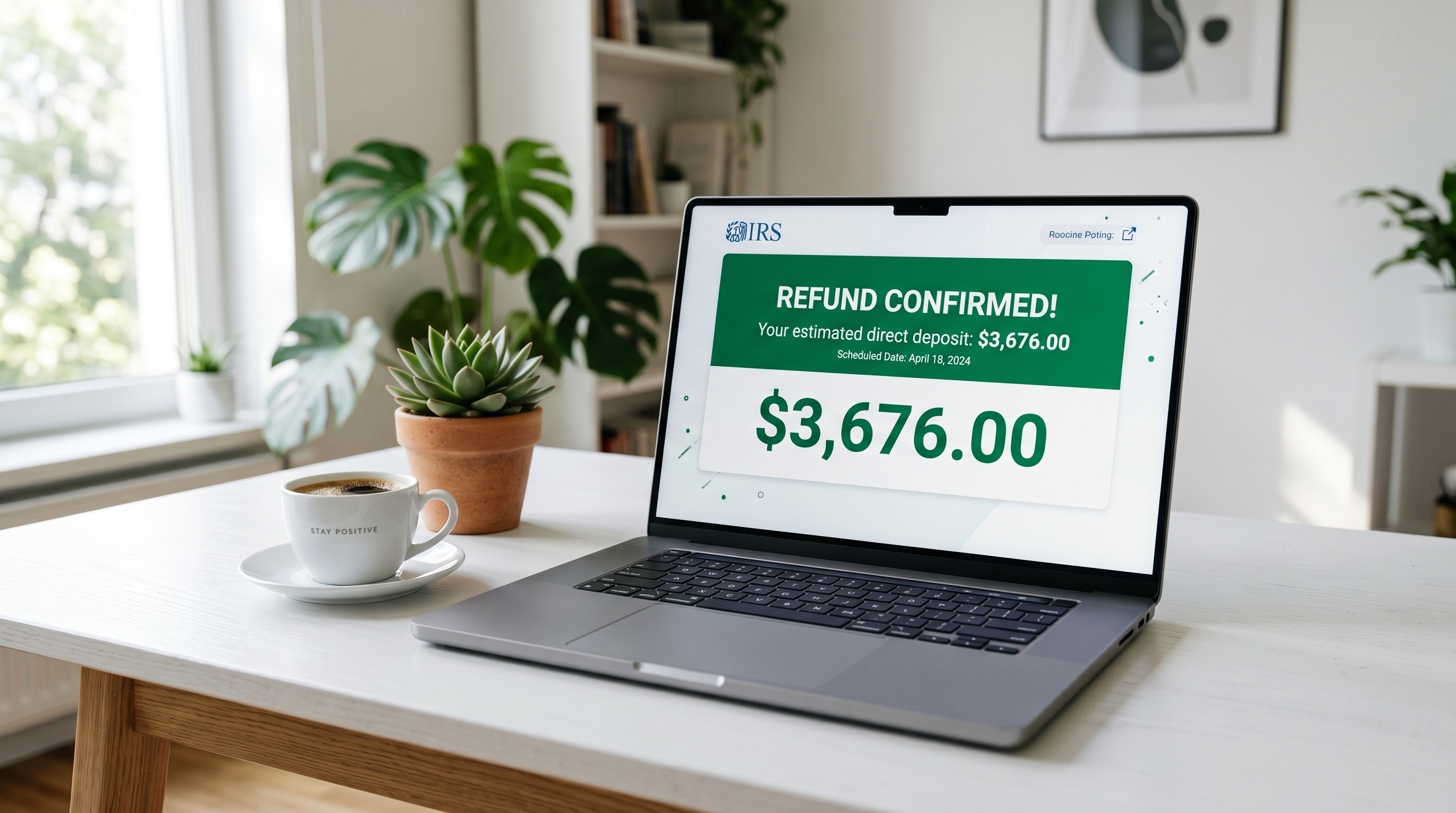
1 in 5 Americans planned to use AI to help file their taxes in 2026 — and the average refund as of March 2026 hit $3,676, up 10.6% from the prior year.
Cash App Taxes is the only major platform offering genuinely free filing for every form — federal and state, including Schedule C (self-employment), Schedule D (investments), and crypto.
H&R Block's free tier covers approximately 55% of filers versus TurboTax's 37% — meaning millions of people paying TurboTax could file for $0 elsewhere.
The IRS has deployed AI audit triggers that flag year-over-year income discrepancies, extreme deduction ratios, and round numbers that suggest estimates — AI tax software helps you avoid these red flags automatically.
UK sole traders and landlords earning over £50,000 must comply with Making Tax Digital (MTD) from April 2026, making compatible AI-powered software mandatory — not optional.
Tax season is the one financial task most people dread, rush through, and consistently under-optimise. The average American leaves $1,200 in unclaimed deductions on the table each year, according to estimates from the National Society of Accountants — not because the money is not theirs, but because finding it manually is tedious and most people do not know what to look for. AI-powered tax software changes that equation: it cross-references your inputs against thousands of deduction patterns, surfaces credits you would never have thought to claim, and runs accuracy checks that human filers routinely miss.
In 2026, 46% of Americans say they trust AI to give accurate tax guidance, and 21% plan to use AI tools directly in their filing process, according to a survey cited by KXAN. Meanwhile, the IRS itself has deployed AI to flag audit targets — running models six times per tax year, learning with each iteration. Understanding what triggers scrutiny is now as important as knowing what to deduct.
This guide covers the best AI tax software of 2026, compares pricing across all major platforms, explains which one is right for your situation, and covers equivalent tools for filers in the UK, Canada, and Australia.
What AI Actually Does in Tax Software — and What It Cannot Do
The AI features in modern tax software fall into three categories. The first is deduction discovery — the software analyses your income, expenses, and life situation to surface credits and deductions you might not know exist (child tax credit, student loan interest, home office deduction, energy efficiency credits, and hundreds more). The second is accuracy checking — AI flags inconsistencies across entries, catches common input errors, and alerts you when a figure looks anomalous compared to similar returns. The third is natural language Q&A — tools like TurboTax's AI Tax Assist and H&R Block's AI Tax Assist let you ask plain-English questions ("Can I deduct my home internet if I work from home?") and receive context-aware answers.
What AI cannot reliably do is replace a human tax professional for genuinely complex situations. One study found that state-of-the-art AI models succeed on less than one-third of federal income tax return calculations even on simplified scenarios. For straightforward W-2 employees, that limitation barely matters — AI software handles routine returns with excellent accuracy. For self-employed filers with multiple income streams, real estate investors, or anyone navigating a major life event (divorce, inheritance, business sale), professional review remains valuable.
"AI filing sounds easy — until it leaves you owing the IRS thousands of dollars. The technology is genuinely powerful for standard filers, but it lacks the judgment a CPA brings to edge cases. Know your complexity level before you choose your tool." — Fox News Opinion, April 2026
Best AI Tax Software of 2026: Comparison Table
The table below covers the six most widely used platforms for US filers in the 2026 tax season. Pricing reflects the federal + one state filing for a moderately complex return (itemised deductions, investment income).
Platform Federal Cost State Cost AI Feature Best For Cash App Taxes $0 $0 Automated checks Most filers — genuinely free FreeTaxUSA $0 $14.99 Deduction finder Complex returns on a budget IRS Free File $0 Varies Guided filing AGI under $89,000 H&R Block Deluxe $65 $49 AI Tax Assist + pro chat Homeowners, investors needing support TurboTax Deluxe $79 $59 AI Tax Assist + interview UX Guided experience, investment income TurboTax Self-Employed $129 $59 AI + deduction maximiser Freelancers, gig workers, small business
Data as of April 2026 tax season. Pricing subject to change; verify current rates on each platform's website. Sources: NerdWallet, CNBC Select, platform websites.

Platform Reviews: Which AI Tax Tool Is Right for You?
Cash App Taxes — Best Free Option (No Catches)
Cash App Taxes is the most genuinely free tax filing platform on the market: $0 for federal, $0 for state, no upsells, no income limits. It handles Schedule C (self-employment and freelance income), Schedule D (capital gains from investments and crypto), Schedule E (rental income), itemised deductions, HSA contributions, and more — all without charging a cent. For the majority of individual filers, it covers every form they need.
The trade-offs are real: the interface is mobile-first and lighter on hand-holding than TurboTax, and it does not support a handful of niche forms (like multi-state filings for high earners). If your return is straightforward and you are comfortable navigating a form-based interface, Cash App Taxes is the clear choice — there is no financial reason to pay $79 for TurboTax if your situation is similar.
FreeTaxUSA — Best for Complex Returns on a Budget
FreeTaxUSA charges $0 for federal filing regardless of how complex your return is, and $14.99 per state — significantly cheaper than any other platform handling itemised deductions, self-employment income, or investment reporting. It is also an official IRS Free File partner, meaning filers with an adjusted gross income (AGI) of $89,000 or less can file completely free, including state. Its AI-powered deduction finder automatically compares your itemised total against the standard deduction to ensure you claim whichever yields the larger tax benefit.
H&R Block — Best AI + Human Support Combination
H&R Block's AI Tax Assist is available on all paid plans and provides 24/7 expert-backed guidance, round-the-clock support, and proactive deduction suggestions — but the differentiating feature is the included access to a live tax professional via chat or screen share. Every paid H&R Block package includes this at no extra cost, whereas TurboTax charges a significant premium for equivalent human access.
H&R Block's free tier qualifies approximately 55% of US filers — versus TurboTax's 37% — meaning millions of people paying for TurboTax would qualify for H&R Block's free tier. All online filers also receive free in-person audit support (H&R Block has roughly 9,000 physical locations), with full enrolled agent representation available as a $19.99 add-on.
TurboTax — Best for Guided Experience and Maximum Integrations
TurboTax remains the market leader for a reason: its interview-style Q&A experience is genuinely the most intuitive on the market, it supports more import partners than any competitor (auto-importing W-2s, 1099s, brokerage statements, and prior-year returns in seconds), and its AI Tax Assist feature is well-integrated throughout the filing flow. For investors with multiple brokerage accounts or filers who want maximum hand-holding, TurboTax justifies its premium.
The critical caveat: TurboTax has a well-documented history of steering users away from its free tier toward paid products. Always start at the IRS Free File portal or check your eligibility for the free version before landing on a paid plan — about 37% of filers qualify for $0.
Pro Tip: Before choosing any paid tax software, check whether your employer or financial institution offers free access. Many major brokerages (Fidelity, Schwab, TD Ameritrade) and large employers offer complimentary TurboTax or H&R Block access to account holders. Free is always better than paid when the product is equivalent.
What the IRS AI Audit System Looks For in 2026
The IRS now runs AI models six times per tax year, training on each batch of filings to sharpen its pattern recognition. Understanding what flags a return for review is directly relevant to how you file — and AI tax software helps you avoid many of these triggers automatically.
Common audit triggers the IRS AI system targets include: significant year-over-year income discrepancies (especially drops in reported income), extreme deduction ratios relative to income level, consistently round numbers in expense categories (suggesting estimates rather than actual records), underreported self-employment income identified by cross-referencing 1099-NEC forms, and mismatches between reported figures and third-party data (W-2s, 1099s, mortgage interest statements).
Good AI tax software addresses several of these automatically — flagging anomalous entries, prompting for documentation, and ensuring reported figures match imported data. This is one area where the AI's value genuinely exceeds what a careful manual filer would catch on their own.
AI Tax Tools in the UK, Canada, and Australia
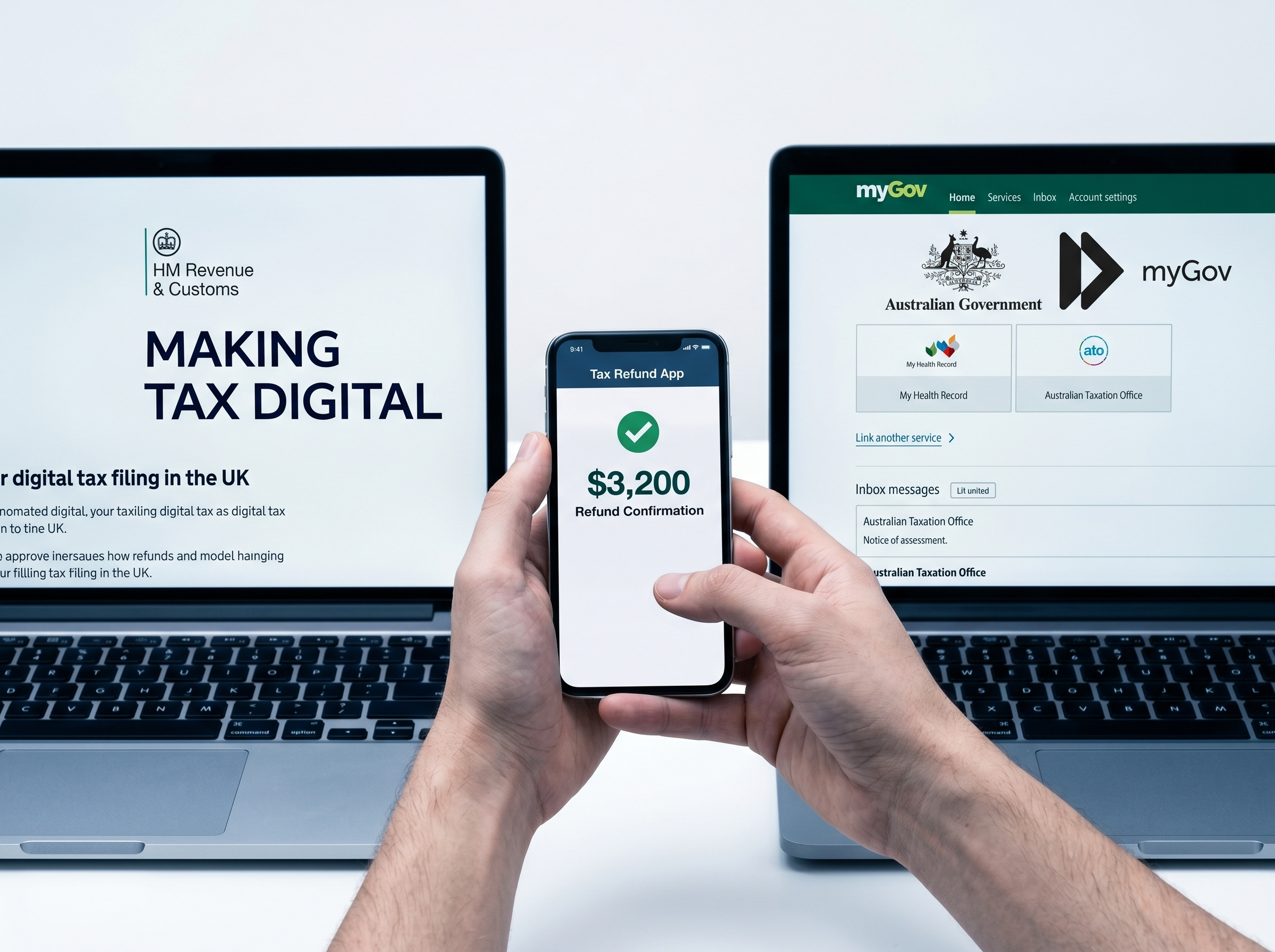
United Kingdom: The UK's tax landscape changed significantly in April 2026 with the mandatory rollout of Making Tax Digital (MTD) for Income Tax. Sole traders and landlords with income above £50,000 must now use HMRC-compatible software for digital record-keeping and quarterly online submissions — paper Self Assessment returns are no longer valid for this group. Those earning above £30,000 will follow in 2027. HMRC-recognised AI-powered options include QuickBooks (which benchmarks your expenses against similar businesses to flag anomalies), Sage, and FreeAgent. For straightforward employed filers, HMRC's own online portal handles Self Assessment at no cost.
Canada: The CRA's NETFILE system accepts returns filed through certified software, with Wealthsimple Tax standing out as the free option that handles most Canadian filers' needs — including RRSP contributions, TFSA room calculations, T4 imports, and rental income. TurboTax Canada and H&R Block Canada offer premium tiers with AI-guided deduction finding and expert review. The CRA also offers AutoFill My Return, which automatically imports T4s, T5s, and most other slips directly from the government's records — dramatically reducing manual data entry.
Australia: The ATO's own myTax portal (accessed through myGov) is free for all individual filers and pre-fills most income data automatically from employer reports, bank interest records, and Centrelink payments. For self-employed Australians, sole traders, and property investors needing more guidance, Etax and H&R Block Australia offer AI-assisted filing with ATO lodgement integration. The ATO also introduced expanded AI-matching capabilities in 2025 to cross-reference rental income, crypto transactions, and capital gains against third-party data — making accurate reporting more important than ever.
Frequently Asked Questions
Q: Is AI tax software accurate enough to trust?
For straightforward W-2 employees, retirees, and simple self-employed filers, AI tax software is highly accurate — it imports your documents directly, cross-checks figures against known tax rules, and applies hundreds of deduction checks automatically. For genuinely complex situations (multi-state returns, business sales, foreign income, trusts, or estates), professional review by a CPA or enrolled agent adds meaningful protection. When in doubt, most platforms offer a hybrid option where AI does the heavy lifting and a professional reviews the final return.
Q: Can I really file my taxes completely free?
Yes, for most people. Cash App Taxes covers federal and all state returns at $0 with no income limit and handles most common forms including self-employment and investment income. FreeTaxUSA offers free federal filing regardless of complexity, with state returns at $14.99. IRS Free File covers filers with AGI of $89,000 or less. The majority of individual filers — including those with investments, mortgage interest, and freelance income — can find a $0 option that handles their return fully.
Q: Does using AI tax software increase my audit risk?
No — if anything, it reduces audit risk. AI software flags inconsistencies before you submit, ensures reported figures match imported documents, and prevents the common errors (round-number estimates, transposition mistakes, missing income) that the IRS's own AI audit system is specifically trained to detect. The risk comes from choosing a tool that does not cross-check your data or from overriding the software's warnings.
Q: What is Making Tax Digital and does it affect me?
Making Tax Digital (MTD) is HMRC's programme to move all UK tax record-keeping and filing to compatible digital software. From April 2026, it is mandatory for sole traders and landlords with income above £50,000. If you are employed and only file a Self Assessment for simple reasons (rental income under the threshold, bank interest), you are not yet affected. From April 2027, the threshold drops to £30,000. HMRC maintains an approved software list on Gov.uk — only use products on that list for MTD compliance.
The Bottom Line
For the vast majority of filers in 2026, there is no reason to spend more than $15 on tax software. Cash App Taxes handles most returns for $0. FreeTaxUSA covers complex situations for $15 per state. Both are accurate, legitimate, and sufficient for most individual filers. Move up to H&R Block or TurboTax only if you genuinely need the human expert access, the guided interview experience, or a specific form those platforms support that the free options do not.
The more important question is not which software to use but how well you have tracked your deductible expenses throughout the year. AI tax software can only surface deductions you have records for. Consider pairing your tax software with an AI-powered expense tracking app to capture deductions year-round — and make sure your emergency fund and savings strategy are solid before your refund arrives so you put that money to work immediately.
Disclaimer: This article is for informational purposes only and does not constitute personalised financial, tax, or legal advice. Tax laws change frequently. Always verify current rules with your relevant tax authority (IRS, HMRC, CRA, or ATO) or a qualified tax professional before filing.
Sources
NerdWallet. "Best Tax Software of 2026." NerdWallet, April 2026. Link
CNBC Select. "Best Tax Software of 2026." CNBC, April 2026. Link
KXAN Austin. "Survey: 1 in 5 Americans to Use AI to Help File Taxes." KXAN, 2026. Link
Capitol Technology University. "Audited by an Algorithm: How the IRS Is Using AI in 2026." CapTechU, 2026. Link
Tax Foundation. "Tracking Three IRS Datapoints to Watch During the 2026 Tax Filing Season." Tax Foundation, 2026. Link
GOV.UK / HMRC. "Making Tax Digital for Income Tax: What It Means." HMRC, 2026. Link
Gadget Gram. "AI Tools Transform Tax Season 2026." Gadget Gram, April 2026. Link
U.S. News Money. "10 Best Tax Software Companies of 2026." U.S. News, April 2026. Link