Best AI Investing Tools of April 2026: Research Smarter, Not Harder
62% of retail investors now use AI tools — and they earn 14% more annually. Compare the 6 best AI investing tools of April 2026 that actually work.
Key Takeaways
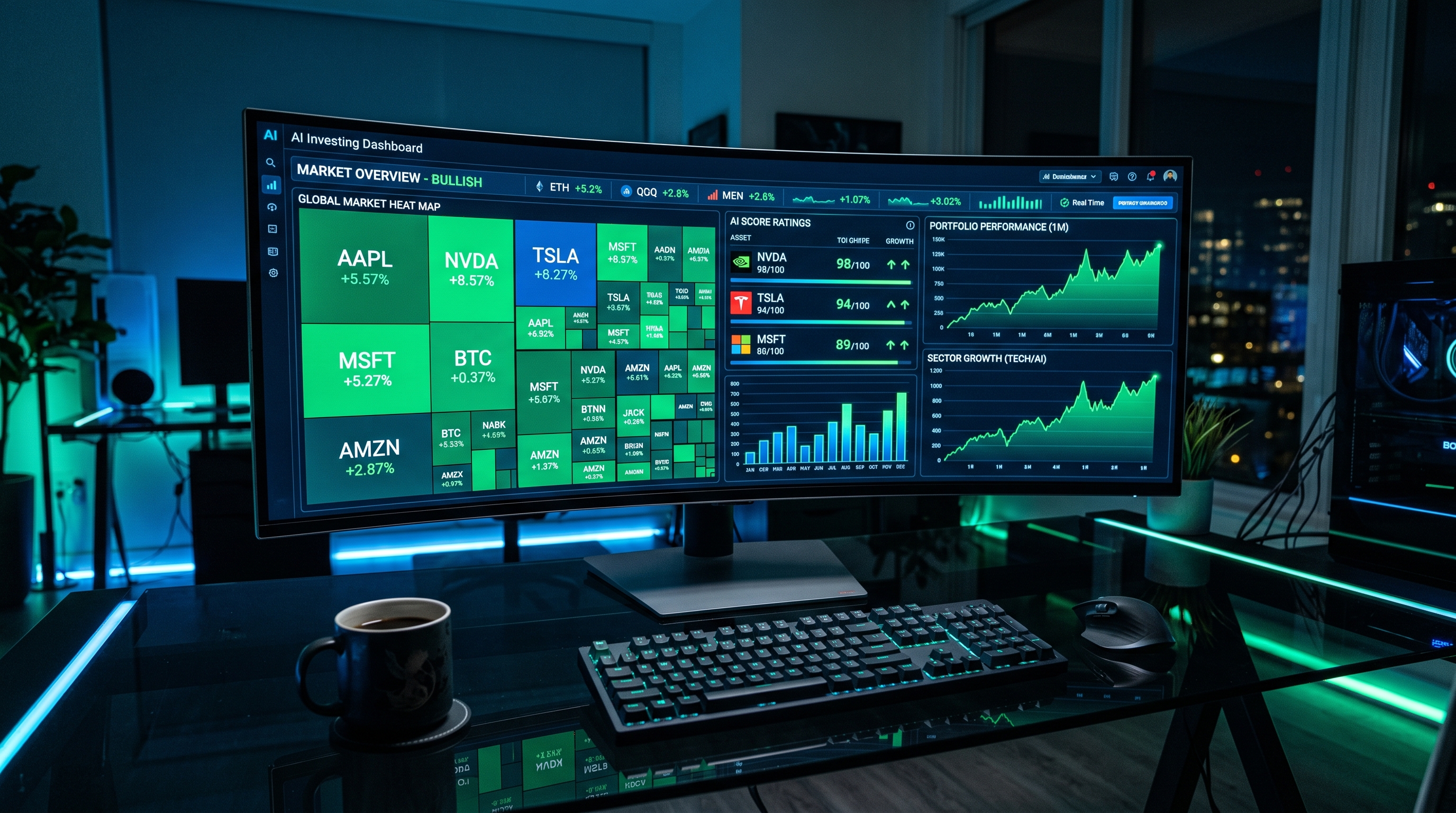
62% of retail investors now use AI tools for investing decisions in 2026 — and those who do report earning an average 14% higher annual returns than peers relying on manual research.
Danelfin is the best AI stock scorer for individual research (free plan available); TipRanks is the strongest all-in-one tool for analyst tracking and sentiment ($99/year); Trade Ideas is the top pick for active day traders.
AI investing tools fall into three categories: stock scorers (Danelfin, Alpha Picks), research aggregators (TipRanks, Magnifi), and active trading scanners (Trade Ideas, LevelFields).
FINRA's 2026 regulatory report issued its first-ever formal warning on AI hallucinations in investing — tools can generate misleading signals, and investors remain fully responsible for their decisions.
No AI tool has consistently beaten the market in independently verified live trading — backtested outperformance should always be treated with appropriate scepticism.
Retail investors have a new research advantage that did not exist five years ago, and it is not expensive. In April 2026, 62% of retail investors use AI tools for at least some of their investing decisions, according to a survey by InvestmentNews — and those who adopted dedicated AI platforms earned an average 14% higher annual return in 2024 than peers who stuck entirely to manual research. For the first time in stock market history, the analytical capabilities once available only to hedge fund quant desks are accessible to anyone willing to pay $0 to $99 per month.
But the market is noisy. Dozens of platforms claim to "use AI" to pick stocks, and the gap between genuine machine-learning infrastructure and a ChatGPT wrapper dressed up with a dashboard is enormous. FINRA's 2026 regulatory oversight report included its first-ever formal section on generative AI, warning investors that AI models can produce hallucinations — plausible-sounding but factually wrong outputs — and that investors bear full responsibility for acting on those signals regardless of the source. The SEC has separately identified AI washing (exaggerating actual AI capabilities) as an enforcement priority in 2026.
This guide cuts through the noise. We evaluated the six most credible AI investing tools available in April 2026, assessed their actual methodology, verified their performance claims against independent data, and matched each tool to the investor type it genuinely serves.
What AI Investing Tools Actually Do — and What They Cannot
Before comparing tools, the distinction between three categories of AI investing product is important, because they solve different problems.
AI stock scorers use machine learning to rate individual stocks based on quantitative factors — price momentum, fundamental quality, earnings revisions, analyst consensus — and produce a composite score or ranking. They help investors filter thousands of stocks down to a shortlist worth researching further. Danelfin and Alpha Picks fall into this category.
AI research aggregators collect and synthesize analyst reports, insider trading data, hedge fund filings, and news sentiment into a unified view of any given stock. They save hours of manual data gathering per company. TipRanks and Magnifi are the strongest tools in this category.
AI trading scanners monitor the entire market in real time for technical setups, volume anomalies, and momentum signals, generating trade alerts for active traders. Trade Ideas and LevelFields are the primary examples.
What no AI tool currently does reliably: predict short-term price direction with consistent accuracy. The stock market incorporates new information faster than any model can react to it. AI tools add the most value in research efficiency and systematic discipline — not in forecasting the unpredictable. Our guide to the best robo-advisors of 2026 covers AI-managed portfolios for hands-off investors.
Best AI Investing Tools of April 2026
Tool Best For Price Key Feature Performance Claim Danelfin Stock scoring and ranking Free — $59/mo AI scores 10,000+ stocks using 900+ daily indicators +376% since 2017 (backtested) TipRanks Analyst and sentiment research Free — $299/yr Smart Score aggregates 8 factors from 96,000+ experts Smart Score 8-10 stocks outperform market (backtested) Trade Ideas Active day trading $89 — $178/mo Holly AI scans 8,000+ stocks daily with 70+ strategies Win rates up to 85% reported on select strategies Alpha Picks Quantitative stock selection Subscription Two picks per month from pure quant model 308.3% verified live-traded return Magnifi Natural language portfolio research Free tier available Search funds/stocks in plain English, multi-account tracking N/A — research tool, not a picker LevelFields Event-driven catalyst investing Free — paid tiers Scans for real-world events that historically drive price action N/A — signal tool
Data as of April 2026. Pricing subject to change. Performance claims are backtested unless otherwise stated. Past performance does not guarantee future results. Sources: TraderHQ, WallStreetZen, provider documentation.
1. Danelfin — Best AI Stock Scorer
Danelfin is the most technically rigorous AI stock scoring platform available to retail investors. Its model analyzes more than 900 daily data points per stock — including technical indicators, fundamental metrics, earnings revisions, and sentiment signals — and synthesizes them into a single AI Score from one to ten. The system covers 10,000+ US and European stocks. A score of eight or higher indicates a statistically elevated probability of outperforming the S&P 500 over the following three months.
Danelfin's backtested results show +376% cumulative return from January 2017 through June 2026 for its highest-rated stocks, compared to +166% for the S&P 500 over the same period. High AI Score (10/10) stocks showed +21.05% average outperformance after three months in backtesting. The critical caveat: these are backtested, not independently verified live-traded results. Danelfin functions best as a systematic shortlist tool — use the score to narrow a watchlist, then conduct your own fundamental research on the resulting candidates.
Pricing: the free plan allows ten stock reports per month. The Plus plan ($22/month) adds unlimited reports and portfolio monitoring. The Pro plan ($59/month) unlocks API access and advanced screening. For most individual investors, the Plus plan offers substantial value.
2. TipRanks — Best for Analyst Research and Sentiment
TipRanks aggregates data from 96,000+ financial experts — Wall Street analysts, financial bloggers, hedge fund managers, and corporate insiders — and tracks their historical accuracy. Its flagship product is the Smart Score, a proprietary rating from one to ten built on eight factors: analyst consensus (weighted by each analyst's verified track record), insider buying activity, hedge fund positioning, news sentiment (AI-processed), blogger sentiment, technical momentum, fundamental quality, and short interest. The combination produces a more holistic picture of a stock's outlook than any single data source.
TipRanks Premium at $99 per year is one of the most defensible subscriptions in the AI investing space — the analyst tracking alone, which shows the historical success rate of every Wall Street analyst before you weight their recommendation, is a genuine research advantage. TipRanks Ultimate at $299 per year adds AI-powered risk analysis and deeper portfolio analytics for more active users. A meaningful free tier exists, covering basic Smart Scores and limited expert data.
3. Trade Ideas — Best for Active Day Traders
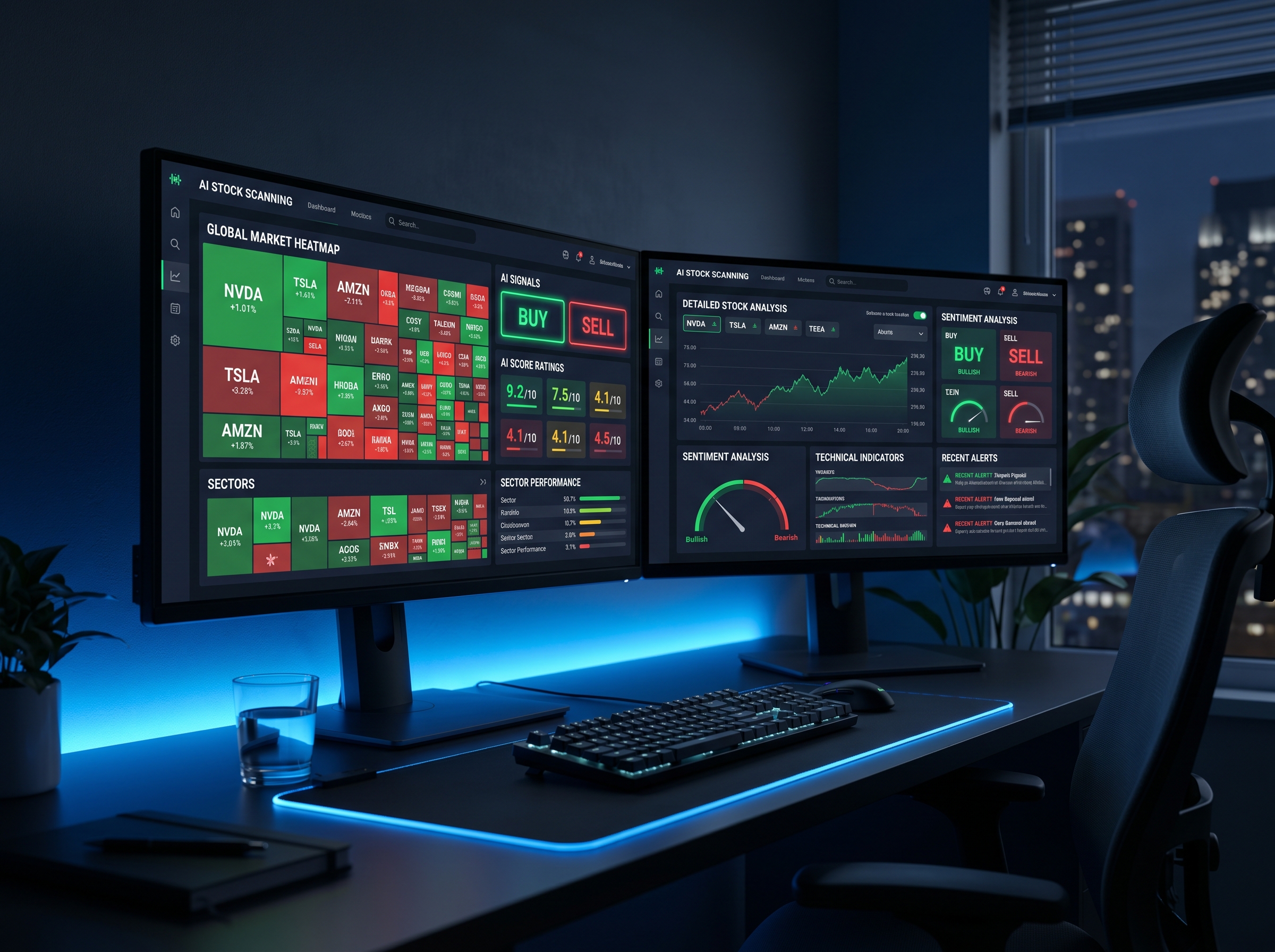
Trade Ideas is built for a different investor than the first two tools — the active trader who wants real-time market scanning rather than fundamental research. Its Holly AI engine monitors more than 8,000 stocks every trading day using 70+ algorithmic strategies, generating intraday trade signals ranked by historical win rate. The second-generation layer — Money Machine — moves beyond signal generation to continuous ranking, surfacing the highest-conviction setups automatically.
Standard plan pricing ranges from $89 per month (billed annually) to $127 per month (billed monthly). The Premium plan runs $178 to $254 per month. These are professional-grade prices justified only for traders who execute frequently enough to recover the subscription cost in improved execution. Trade Ideas does not publish Holly AI's live track record publicly — a transparency gap worth noting. For passive and long-term investors, the tool's cost and complexity are difficult to justify. For active traders who currently spend hours on manual scanning, Holly AI eliminates most of that workload.
4. Alpha Picks — Best Verified Performance
Alpha Picks is the only tool on this list with independently verified live-traded performance: a 308.3% return on its quantitative model's recommendations. Unlike Danelfin's backtested numbers, Alpha Picks' results reflect actual signals issued to subscribers at specific dates, with no look-ahead bias. The model scans US equities monthly and selects the two highest-scoring stocks based on five pure quantitative factors — Value, Growth, Profitability, Momentum, and Earnings Per Share Revisions. Human discretion plays no role in selection.
The limitation is that two picks per month is a narrow, concentrated output. Investors who want broad market coverage or daily signals will need a complementary tool. Alpha Picks works best for investors who want one systematic stock selection process running in the background, contributing a small allocation of their portfolio alongside a diversified core.
5. Magnifi — Best for Natural Language Portfolio Research
Magnifi takes a different approach entirely. Rather than scoring individual stocks, it functions as an AI research interface — you ask questions in plain English ("Find me dividend ETFs with expense ratios under 0.15%"), and Magnifi surfaces relevant funds and stocks from its database alongside comparative analysis. It also connects to multiple brokerage accounts to provide a consolidated portfolio view. For investors who find traditional stock screeners overwhelming, Magnifi substantially lowers the technical barrier to data-driven research. A free tier is available; paid plans add deeper analytics.
6. LevelFields — Best for Event-Driven Investors
LevelFields occupies a niche that the other tools on this list largely ignore: catalyst-driven price movements. The platform scans thousands of US equities for real-world events — earnings beats, management changes, FDA approvals, share buyback announcements, activist investor disclosures — and flags those that have historically preceded significant price moves. For investors whose strategy is built around identifying catalysts rather than fundamental value, LevelFields provides a systematic early-warning system that manual news reading cannot replicate at scale.
Real Risks of AI Investing Tools: What FINRA and the SEC Are Warning About
The adoption of AI investing tools has outpaced the regulatory framework around them, and three specific risks deserve attention before committing capital to any AI-generated signal.
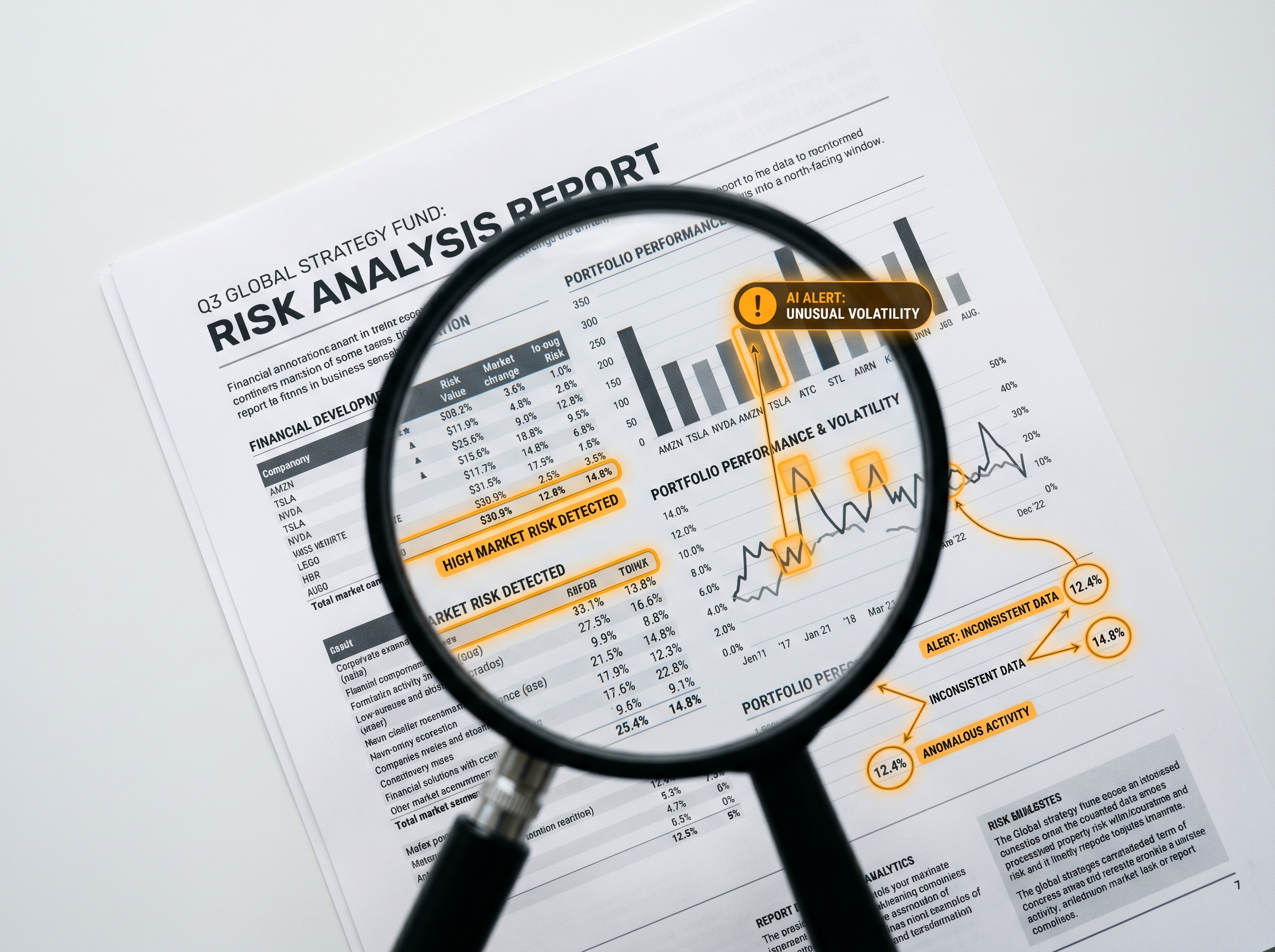
AI hallucinations: FINRA's 2026 regulatory oversight report formally warned that AI models can generate plausible-sounding but factually incorrect outputs about market data, company filings, or historical performance. Unlike a spreadsheet error — which is usually obvious — an AI hallucination can sound authoritative and specific. Any AI-generated analysis of a specific stock should be cross-referenced against primary sources before acting.
AI washing: The SEC has identified AI washing as a 2026 enforcement priority — the practice of platforms overstating their AI capabilities to attract subscribers. Before subscribing to any AI investing platform, verify whether its performance claims are backtested or live-traded, and whether an independent third party has verified the returns. Backtested performance with perfect hindsight is fundamentally different from forward performance in live markets.
Herding risk: 24.2% of retail investors in the InvestmentNews survey expressed concern about market herding — the scenario where thousands of investors acting on the same AI signals amplify the very moves the model identified, temporarily self-fulfilling its predictions before an inevitable reversal. As AI tools become mainstream, the statistical edge of any signal diminishes as more capital chases it. Diversifying across different methodologies, rather than relying on a single AI platform, reduces this concentration risk.
Important: FINRA explicitly states that broker-dealer firms — and by extension individual investors — remain fully responsible for decisions made based on AI-generated outputs. An AI tool's recommendation does not reduce your legal or financial accountability for a trade. Use AI as a research accelerator, not as a replacement for your own judgment.
AI Investing Tools for UK, Canadian, and Australian Investors
All six tools reviewed above are primarily US-focused but accessible globally. UK investors should note that the Financial Conduct Authority (FCA) regulates investment advice — AI tools that stop at research and scoring are generally not classified as regulated advice, but any tool that generates personalised buy or sell recommendations for UK users may fall under FCA jurisdiction. The FCA issued updated AI guidance in early 2026 reminding firms that accountability for AI-generated outputs rests with the firm deploying them.
In Canada, the Canadian Securities Administrators (CSA) have flagged AI investment tools as a priority monitoring area in 2026. Canadian investors can use all tools reviewed here for research; tools that provide personalised investment recommendations may qualify as investment advice under provincial securities law depending on context.
Australian investors benefit from ASIC's Digital Finance Guidance, which clarifies that AI research tools used for general market analysis do not trigger financial services licensing requirements — but any tool providing personal advice to a specific investor based on their circumstances does. The distinction matters if you are evaluating whether a premium subscription constitutes personalized advice versus general research.
For all Tier 1 markets: interest and dividends earned on investments identified through AI tools are taxed identically to those identified through manual research. The source of the investment idea has no bearing on tax treatment. Our AI tax software guide covers how to accurately report investment income in the US, UK, Canada, and Australia.
Frequently Asked Questions
Q: Can AI actually beat the stock market?
The evidence is mixed and the framing matters. Backtested AI strategies frequently outperform market indexes — but backtesting allows models to be tuned with perfect hindsight, producing results that rarely translate to live markets. Alpha Picks' 308.3% verified live-traded return is exceptional but represents one tool over a specific favourable period. Robo-advisors using AI delivered 8.5% annualized returns versus 7.2% for human advisors in 2023 benchmarks — a meaningful edge, but not market-beating performance. AI is most defensibly valuable as a research efficiency tool and a discipline enforcer, not as a crystal ball.
Q: Are AI investing tools worth the subscription cost?
At the free or entry-level tier, almost certainly yes — the research value from TipRanks' free Smart Scores or Danelfin's free plan exceeds what most individual investors would produce in equivalent research time. At the $89-to-$178/month range (Trade Ideas), the tool only makes economic sense if you trade frequently enough to capture the efficiency gain in your returns. As a benchmark: if you manage less than $50,000 and trade fewer than 20 times per month, a $100+/month scanner subscription is difficult to justify on a risk-adjusted basis.
Q: What is the difference between an AI investing tool and a robo-advisor?
A robo-advisor manages your money for you — it invests your deposits, rebalances your portfolio, and sometimes harvests tax losses automatically. You give it capital and it executes a strategy on your behalf. An AI investing tool gives you information and signals, but you make every decision and execute every trade yourself. Robo-advisors charge an annual management fee (typically 0.25% to 0.40%) on your invested assets; AI research tools charge flat subscription fees regardless of portfolio size. Our guide to the best robo-advisors of 2026 covers the managed option in full.
Q: Do I need more than one AI investing tool?
For most investors, one well-chosen tool is sufficient. The ideal combination for a self-directed long-term investor is a stock scorer (Danelfin or TipRanks) to identify candidates, plus a brokerage's built-in research tools for final due diligence. Active traders may benefit from adding a scanner (Trade Ideas or LevelFields) to that stack. Using six tools simultaneously creates data overload rather than a genuine edge — contradictory signals across platforms are common, and managing them requires more analytical capacity than the tools themselves provide.
Q: Is it legal to use AI to pick stocks in the UK and Australia?
Yes, for personal investment decisions. Using any AI tool — Danelfin, TipRanks, or otherwise — to inform your own investment decisions is entirely legal in the UK, Canada, Australia, and the US. The regulatory questions arise for financial services firms that deploy AI to provide advice to clients, not for individuals using AI for personal portfolio research. If an AI tool is managing money on your behalf (as a robo-advisor does), it must be operated by an entity with the appropriate financial services license in your jurisdiction.
The Bottom Line
AI investing tools have moved from novelty to genuine research infrastructure in 2026. For the self-directed investor, TipRanks Premium at $99 per year is the single highest-value subscription on this list — the analyst tracking, Smart Score system, and insider trading data combine into a research platform that would have cost institutional money five years ago. Danelfin's free plan is a strong complementary tool for anyone who wants a quantitative cross-check before committing to a position.
The most important discipline is using these tools for what they are good at — systematic research, filtering, and discipline — rather than outsourcing the entire decision to an algorithm. The investors earning that 14% annual return premium are not blindly following AI signals. They are using AI to work through more data, more systematically, before making better-informed human decisions. Once your research process is sharper, the next step is making sure your portfolio structure is right — our guide to the best S&P 500 ETFs of 2026 covers the low-cost foundation that AI-enhanced research should build on top of.
Disclaimer: This article is for informational purposes only and does not constitute personalized financial, investment, legal, or tax advice. AI tool performance claims are based on backtested or platform-reported results unless independently verified, and past performance does not guarantee future results. Always consult a qualified financial professional before making investment decisions.
Sources
InvestmentNews. "AI adoption in investing hits inflection point as 78% of investors turn to tools." 2026. Link
InvestorIdeas. "Retail Investors Rapidly Adopt AI Tools." April 2026. Link
WallStreetZen. "Danelfin Review: Pros, Cons, and AI Performance in 2026." 2026. Link
TraderHQ. "TipRanks Review (2026) — Is Smart Score Worth It?" 2026. Link
TraderHQ. "Alpha Picks vs Danelfin (2026): Which AI Service Wins?" 2026. Link
AI Trading Camp. "Trade Ideas Review 2026: Holly AI Stock Scanner Tested." 2026. Link
Wealth Management. "FINRA Warns Brokers of Gen AI Hallucination Risks." 2026. Link
SEC.gov. "SEC Charges Two Investment Advisers with Making False and Misleading Statements About Their Use of Artificial Intelligence." 2024. Link
SCNSoft. "Q1 2026 Investment Artificial Intelligence Trends." April 2026. Link
LevelFields. "Top 5 AI Tools for Investing." 2026. Link